Flatbreads & Griddle · American home cooking
Buttermilk Pancakes
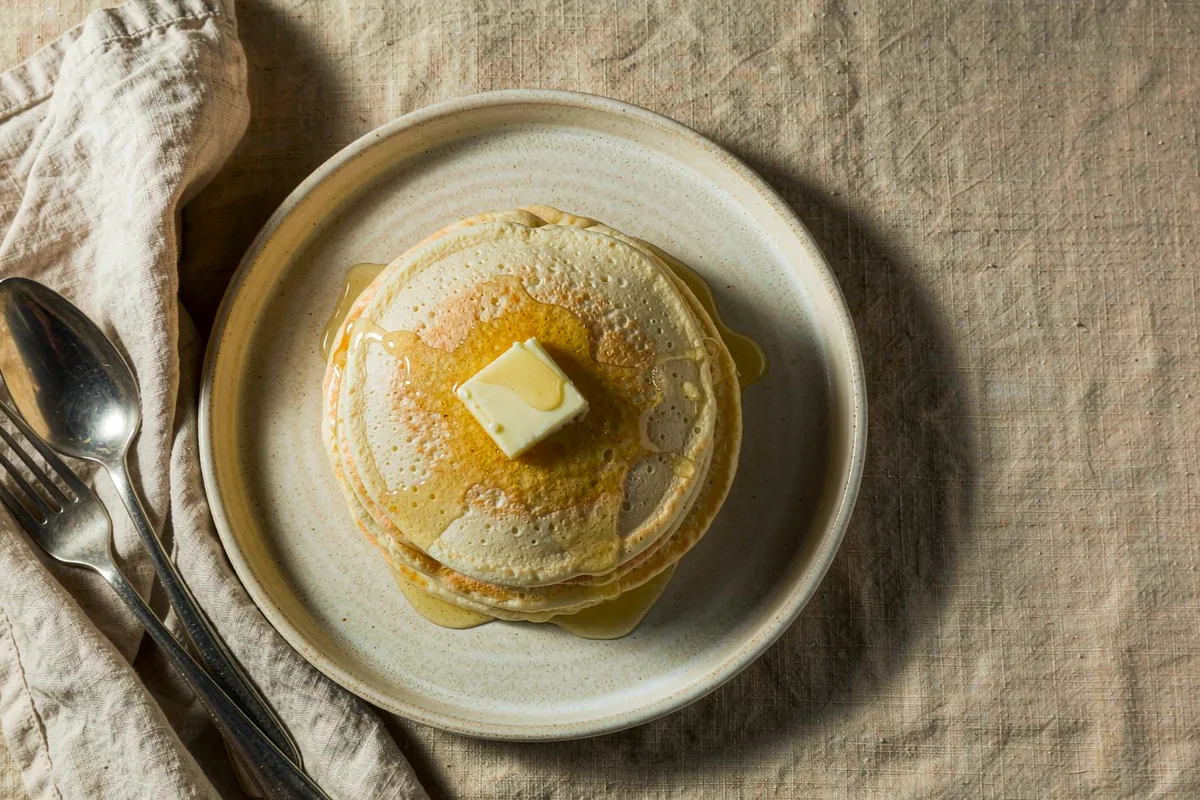
Tangy buttermilk and a thick, lumpy batter meet a medium griddle, giving tall cakes with a tender crumb, crisp lacy edges and bubbles that signal the flip.
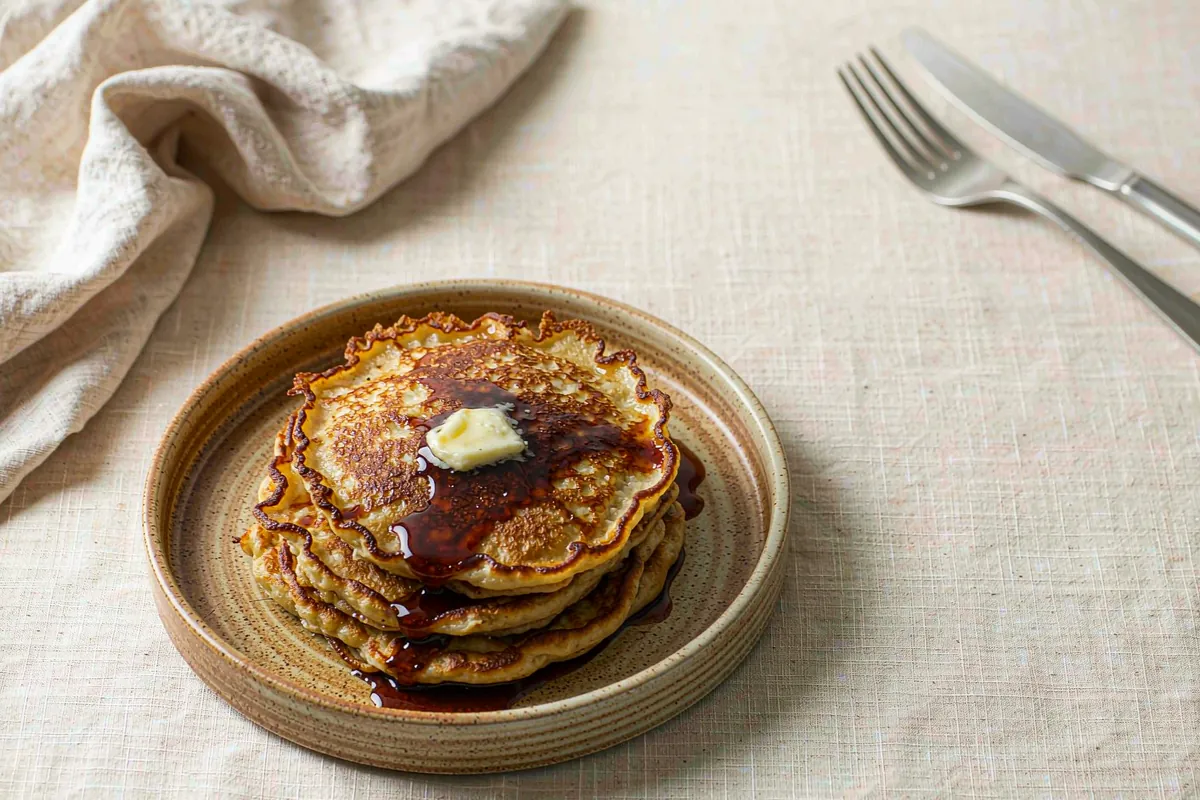
About this dish
The batter should be thick enough to fall from the spoon in a slow ribbon and hold a faint trail for two seconds; thin batter gives flat, tough cakes. Buttermilk's acid wakes the baking soda, so you see bubbles stirring through the bowl and hear a soft fizz before the pan is hot. Resting it ten minutes lets those bubbles settle into a steady rise. On the griddle, wait for the edges to turn matte and bubbles to break across the top and stay open, then flip.
Before you start
Equipment: Griddle. Tap the ingredient checkboxes as you go.
Method
7 steps · tick each one off as you finish it.
Whisk the dry mix
Sift the flour, sugar, baking powder, bicarbonate of soda and salt into a wide bowl and whisk for 30 seconds until the colour is uniform and no streaks of white powder remain.
Combine the wet mix
In a jug, beat the 350 ml buttermilk, eggs, melted butter and vanilla for 20 seconds until pale and slightly frothy, with no separate ribbons of egg white visible at the surface.
Fold, do not beat
Pour the wet mix into the dry and fold with a spatula for about 15 strokes, stopping while a few floury lumps remain. The batter should be thick, spoonable and just able to hold a two-second trail; overmixing makes rubbery cakes.
Rest the batter
Cover and rest 10 minutes at room temperature; you will hear a faint fizzing as the buttermilk and soda react. The surface should look pocked with tiny bubbles and the batter will thicken by a spoonful or two.
Heat the griddle
Set a griddle or heavy skillet over medium heat for 4 minutes; a drop of water should sit and sizzle for 2 seconds before vanishing. Brush with 5 g butter, which should foam quietly, not brown.
Pour and watch for bubbles
Ladle 60 ml batter per cake, leaving 4 cm between them. After about 90 seconds the edges turn matte and bubbles break across the top and stay open; the underside should be even deep gold when you lift a corner.
Flip and finish
Flip once and cook 60-90 seconds more until the second side is golden and the centre springs back when pressed. Keep finished cakes on a rack in a 90°C oven for up to 10 minutes so the edges stay crisp.
Tips that matter
- Stop folding while a few lumps of flour remain; a perfectly smooth batter has already been overmixed and will bake up tough.
- Wipe the pan with a paper towel between batches so stray butter does not darken and speckle the next cakes.
Easy variations
- Fold 80 g blueberries into the rested batter and cook 30 seconds longer per side.
- Replace 50 g flour with 50 g fine cornmeal for a slightly sandy, golden crumb.
Questions that come up
When exactly should I flip?
When the glossy surface turns matte, the edges look set, and bubbles break on top and leave open holes that do not fill back in, usually around 90 seconds.
Can I make the batter ahead?
Not really; the soda starts reacting as soon as it meets the buttermilk. Mix the dry and wet ingredients separately the night before and combine them just before cooking.
Nutrition, roughly
| Energy | 340 kcal |
|---|---|
| Protein | 9 g |
| Carbohydrate | 45 g |
| Fat | 14 g |
Estimated per serving from standard ingredients, rounded. Treat it as a guide, not clinical data.
Flour, Water and Rest: Working with Wheat Dough
The three states of a simple dough, how hydration changes them, and why resting time is an ingredient rather than a pause.