Congee, Porridge & Oats · Chinese home cooking
Century Egg and Pork Congee
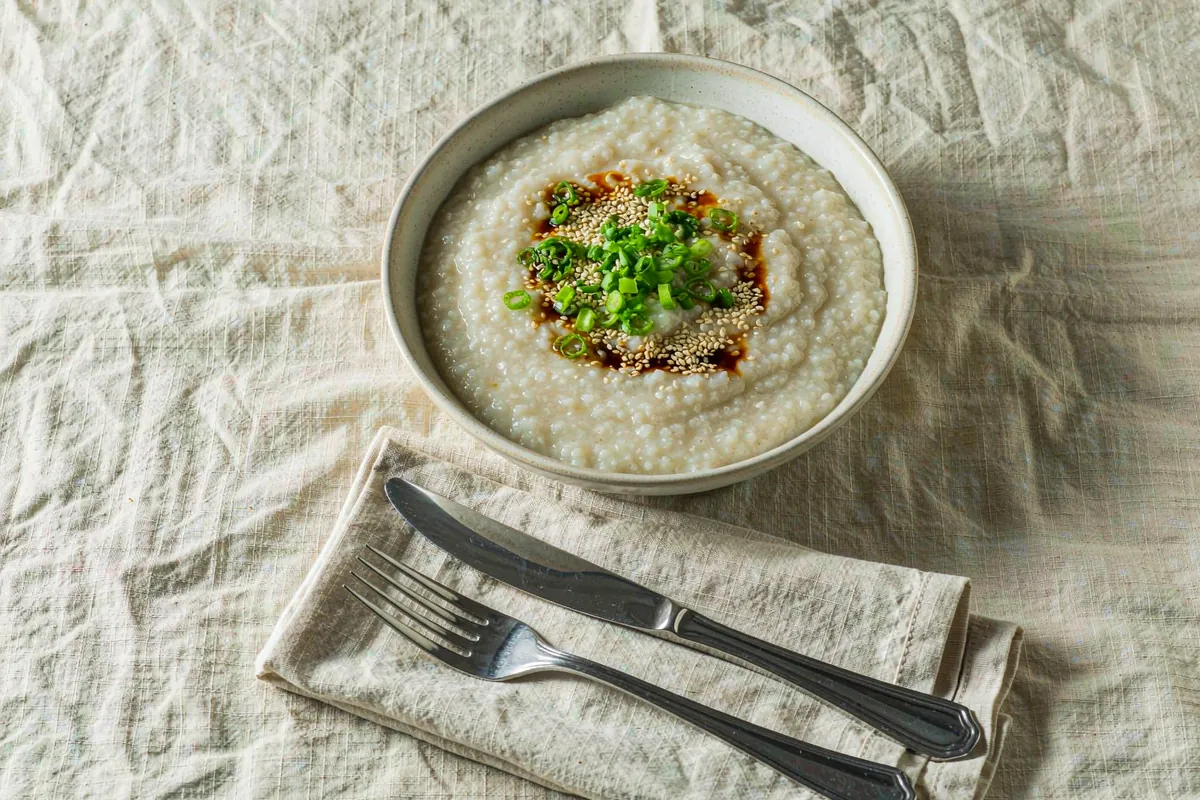
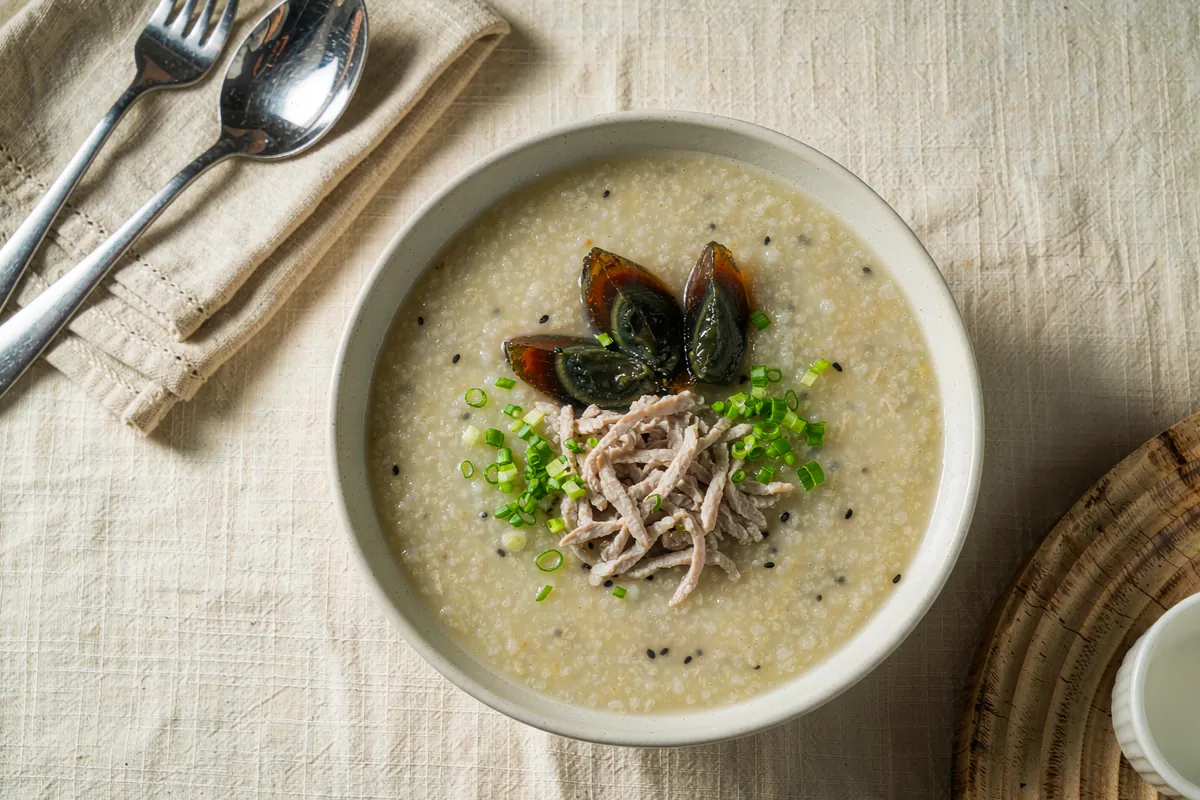
Silky rice congee with marinated pork shreds and wedges of century egg, the dark amber yolks softening into the broth and a sharp scallion finish.
About this dish
Century egg looks alarming in the shell, mottled grey and ink-blue, but turns mild in hot congee: the white goes faintly rubbery, the yolk creamy and a little sulphurous. The real work is the pork. A short marinade with cornstarch and oil keeps the shreds slippery instead of grey gravel. Add the meat at the very end in a thin stream and stir only to separate it. You should see pale ribbons suspended in the porridge and smell ginger and sesame.
Before you start
Equipment: Pot. Tap the ingredient checkboxes as you go.
Method
8 steps · tick each one off as you finish it.
Marinate the pork
Toss the pork shreds with soy sauce, cornstarch, Shaoxing wine and sesame oil for 30 seconds, then leave for 15 minutes. The starch should coat every strand in a thin, slightly tacky film; this is what stops the meat seizing in the hot porridge.
Prep the century eggs
Peel the eggs, rinse away any clinging lime ash and pat dry. Cut each into 6 wedges with a wet knife, wiping the blade between cuts; the yolks are soft and will smear. Set aside, keeping the amber centres intact for the bowls.
Start the congee
Rinse the rice for 60 seconds, drain, then rub with 1 tbsp oil. Tip into a 2.5 litre pot with 1.8 litres water and the ginger. Bring to a boil over high heat, about 8 minutes, stirring twice from the bottom.
Simmer low
Drop to the lowest heat, set the lid ajar and cook 40 minutes, stirring every 10 minutes. The rice should burst and the liquid turn from cloudy to a thin, glossy cream. A spoon dragged through should leave a channel that closes over 3 seconds.
Add half the egg
Fish out the ginger slices. Add half the century egg wedges and simmer 5 minutes more; they should soften at the edges and tint the congee a faint grey-green. This gives the broth its quiet mineral depth without making every spoonful taste strongly of egg.
Slip in the pork
Raise the heat to a bare simmer. Scatter the pork in a thin stream, stirring constantly for 90 seconds; the shreds should turn from pink to pale beige and separate, with no clumps. Do not boil hard or the starch coating will turn gummy.
Season and rest
Stir in the salt and white pepper, then turn off the heat and rest 3 minutes. The congee should coat the back of a spoon and hold a soft sheen. Taste for a clean, gently savoury finish with just a hint of ginger heat.
Finish the bowls
Ladle into warm bowls and top with the remaining egg wedges, scallions, sesame seeds and coriander. Add a few drops of soy sauce at the table. The dark amber yolks should sit proud of the pale porridge rather than sinking into it.
Tips that matter
- Cut the pork across the grain into thin shreds, then chill it 20 minutes before slicing; cold meat holds a cleaner edge and cooks more evenly.
- A wet knife and a light hand matter with century eggs. If a yolk is very runny, dust the cut face with 1/4 tsp cornstarch before adding.
Easy variations
- Replace the pork with 200 g raw peeled shrimp, added with the egg wedges for the last 3 minutes, for a sweeter bowl.
- Stir 60 g torn lettuce or spinach in at the end for colour; it wilts in the residual heat within 30 seconds.
Questions that come up
Why did the pork turn tough and clumpy?
It went into a hard boil or sat too long. Keep the heat at a bare simmer, scatter the shreds slowly and stir for only 90 seconds before turning off the heat.
Can I leave out the century egg?
Yes, and the dish becomes a simple pork congee. Add 1/2 tsp more salt and a handful of sliced shiitakes with the ginger to replace the savoury depth.
Nutrition, roughly
| Energy | 340 kcal |
|---|---|
| Protein | 22 g |
| Carbohydrate | 38 g |
| Fat | 10 g |
Estimated per serving from standard ingredients, rounded. Treat it as a guide, not clinical data.
A Staple Cupboard That Earns Its Space
A short list of grains, flours and dried noodles, how long they actually keep, and what each one can become once it reaches the pan.