Rice & Fried Rice · Chinese home cooking
Clay Pot Rice with Chinese Sausage
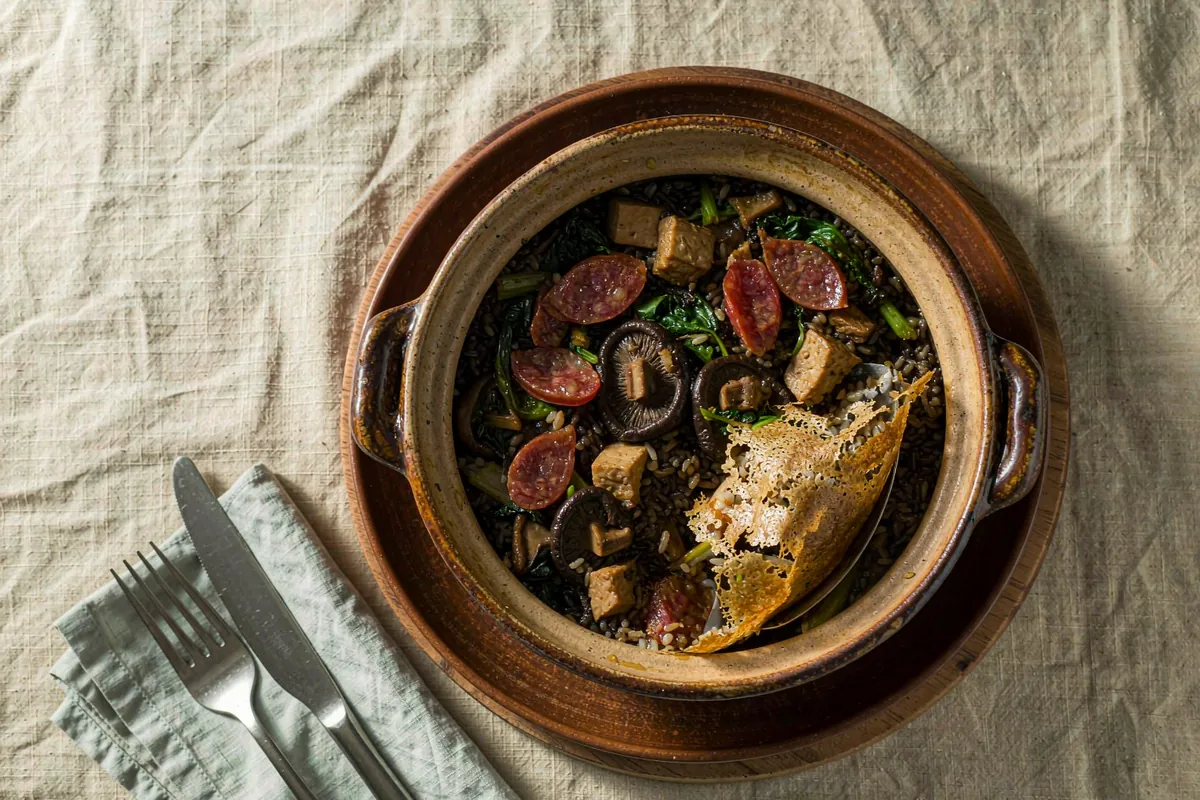
Rice simmered in a clay pot with lap cheong and shiitake, then rested until a thin golden crust forms and the sausage fat perfumes every grain.
About this dish
A clay pot holds heat unevenly, and that is exactly the point. The bottom fries in sausage fat while the top steams, so one spoonful gives soft rice, a chewy amber crust and the sweet, winey smell of lap cheong in the grains. You cook by ear: a steady mutter means water remains, a dry ticking means the crust is forming. Rotate the pot a quarter turn every few minutes so no spot scorches. Crack the lid and the first steam smells of soy and rendered fat.
Before you start
Equipment: Pot. Tap the ingredient checkboxes as you go.
Method
8 steps · tick each one off as you finish it.
Soak and slice
Rinse the rice for 60 seconds until the water runs clear, then drain 10 minutes. Soak the shiitakes in 150 ml warm water for 20 minutes and keep the liquid. Slice the sausage into thin coins and halve any greens stalk thicker than a pencil.
Oil the pot
Brush a 20 cm clay pot or heavy saucepan with 1 tbsp oil, taking it 3 cm up the sides; this film releases the crust later. Set over medium heat for 1 minute until the base feels warm to a held palm.
Start the rice
Tip in the rice, 330 ml water or stock and the salt, then level the surface. Bring to a boil uncovered, about 4 minutes, until bubbles break evenly across the surface and the water has dropped to the level of the grains.
Lay on the toppings
Scatter the shiitakes and ginger over the rice, then arrange the sausage coins in one layer. Cover with a tight lid, drop the heat to low and cook for 12 minutes without lifting. You should hear a low, steady mutter rather than an angry rattle.
Rotate for the crust
After 12 minutes, turn the pot a quarter turn and cook 5 minutes more on low. The smell shifts from plain steam to sweet smoke as the fat renders. A faint dry ticking at the base means the bottom layer is starting to crisp.
Steam the greens
Lift the lid, lay the greens and scallions on top of the rice, and cover again for 3 minutes. They should turn from stiff and bright to limp and deep green, wilted by trapped steam alone, with no direct contact with the scorching base.
Rest and make the sauce
Turn off the heat and rest covered for 10 minutes; the crust keeps crisping in residual heat. Whisk the light and dark soy, sesame oil, sugar and 2 tbsp mushroom liquid in a small bowl until the sugar has fully dissolved.
Scrape and serve
Drizzle the sauce around the edge, then lift from the bottom in broad sheets with a wooden spoon. You should hear a dry crackle and see thin amber flakes clinging to the rice. Serve in the pot so the crust stays crisp.
Tips that matter
- No clay pot? A 20 cm cast-iron or heavy stainless saucepan works; the crust is thinner but the same low-and-slow timing applies.
- If your hob runs hot, slip a heat diffuser under the pot after the first boil to stop the base catching before the grains are tender.
Easy variations
- Swap the sausage for 150 g marinated chicken thigh in 2 cm pieces, added with the mushrooms, and cook 3 minutes longer covered.
- Crack an egg into a hollow in the rice for the last 5 minutes of cooking, then let it set during the final rest.
Questions that come up
How do I stop the bottom from burning?
Keep the heat at low once the lid goes on and rotate the pot. A sharp scorched smell means it has gone too far; a toasted, nutty smell is right.
Why is my crust soft instead of crisp?
The ten-minute rest was skipped or the lid stayed on with the heat still running. Rest off the heat with the lid on, then uncover and serve at once.
Nutrition, roughly
| Energy | 610 kcal |
|---|---|
| Protein | 20 g |
| Carbohydrate | 78 g |
| Fat | 24 g |
Estimated per serving from standard ingredients, rounded. Treat it as a guide, not clinical data.
Rice, Water and Heat: A Ratio Field Guide
Why one cup of rice does not always want one cup of water, and how to tell a cooked pot from a steamed one before you lift the lid.