Pasta & Italian Rice · American home cooking
Baked Macaroni and Cheese
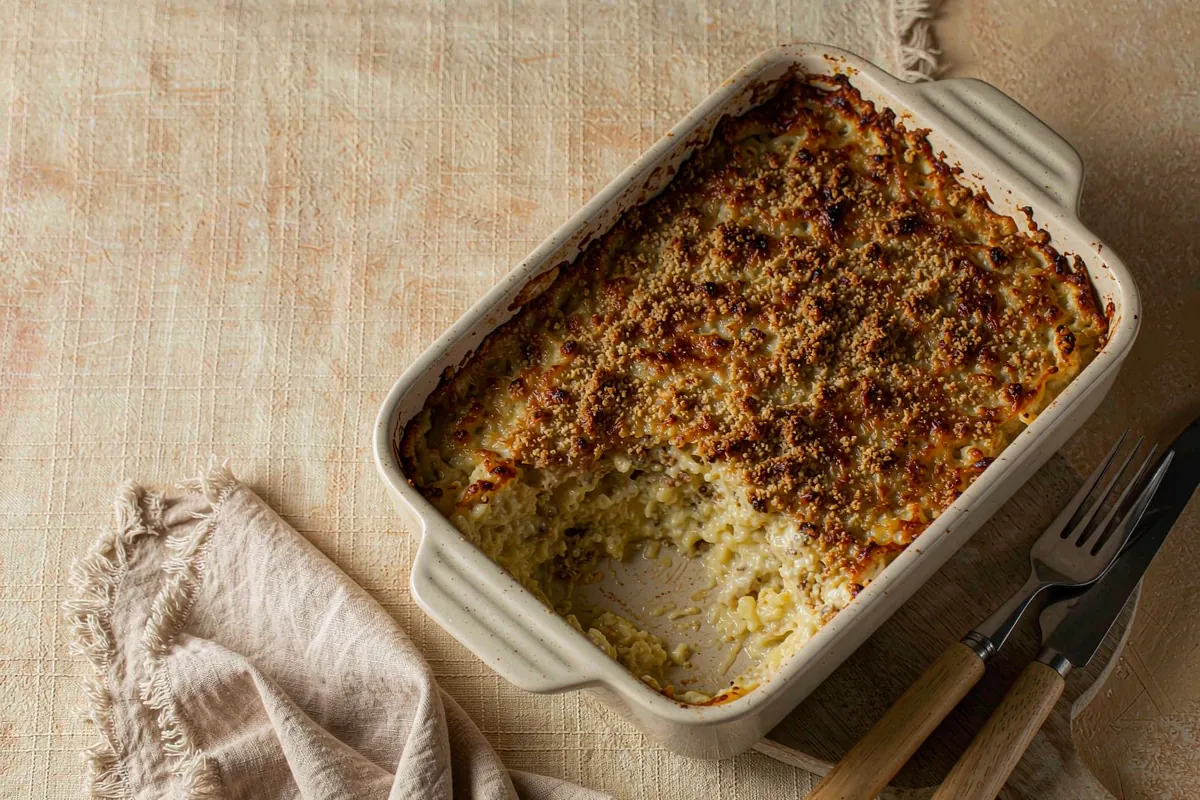
Elbow macaroni is folded into a roux-thickened cheddar sauce, topped with more cheese and baked until the surface turns blotchy gold and the edges bubble.
About this dish
The heart of baked macaroni is the roux: butter and flour cooked together for a minute until they smell faintly like toasted biscuits, then whisked with milk into a sauce thick enough to coat a spoon. Sharp cheddar goes in off the heat so it melts smooth instead of turning grainy. In the oven the top blisters into golden patches while the edges bubble and the kitchen fills with a warm, salty smell. Let it rest before scooping, or the sauce runs.
Before you start
Equipment: Pot, Oven. Tap the ingredient checkboxes as you go.
Method
7 steps · tick each one off as you finish it.
Boil the pasta
Bring 4 litres of salted water to a rolling boil over high heat, about 8 minutes, add 400 g macaroni and cook 2 minutes short of the packet time, 7 minutes. This is the point to stop: a tube is floppy but keeps a firm white core.
Make the roux
Drain the pasta. Melt 50 g butter in a pot over medium heat, whisk in 50 g flour and cook 90 seconds, stirring, until it bubbles and smells like toasted biscuits, not raw flour; the paste should turn a pale sandy colour.
Build the sauce
Pour in 700 ml warm milk a splash at a time, whisking hard over medium heat for 4 minutes. Look for this: the sauce coats the back of a spoon and a finger drawn through leaves a clean line that does not flood back.
Melt in the cheese
Take the pot off the heat, add 1 tsp salt and 1/2 tsp nutmeg, then stir in 300 g cheddar by handfuls for 60 seconds. The cue is simple: no unmelted streaks remain and the sauce falls from the spoon in a smooth, glossy ribbon.
Assemble the dish
Fold the macaroni into the sauce for 30 seconds until every tube is coated, then tip into a buttered 2 litre dish and level the top. Scatter 80 g gruyère, then strew over 40 g breadcrumbs tossed with 1 tbsp melted butter.
Bake until blistered
Bake in a 200 C oven for 20 minutes. It is done when the top is blotched deep gold, the crumbs crisp to the touch, and thick bubbles break at the edges with a slow wet plop; a knife at the centre comes out hot.
Rest and serve
Let the dish rest 10 minutes so the sauce sets; the surface should stop heaving and hold a clean scoop. Serve in warm bowls while the cheese still stretches in short strings from the spoon and the top crumbs keep their crunch.
Tips that matter
- Grate the cheese yourself from a block; pre-shredded cheese is coated in starch that can make the sauce faintly grainy.
- Undercook the pasta by 2 minutes because it keeps softening in the hot sauce and then again in the oven; fully cooked noodles turn to mush.
Easy variations
- Fold 150 g cooked broccoli florets or 100 g diced ham into the sauce before baking for a fuller one-dish supper.
- Replace 100 g cheddar with crumbled blue cheese or smoked gouda for a sharper, more adult flavour.
Questions that come up
Why did my cheese sauce turn grainy or split?
The heat was too high when the cheese went in. Always melt it off the flame, add it a handful at a time, and use warmed milk so the roux stays smooth rather than seizing.
Can I assemble macaroni and cheese ahead?
Yes. Build the dish, cover and refrigerate for up to a day, then bake from cold for 30 to 35 minutes, adding 10 minutes and tenting with foil if the top browns too fast.
Nutrition, roughly
| Energy | 610 kcal |
|---|---|
| Protein | 26 g |
| Carbohydrate | 62 g |
| Fat | 30 g |
Estimated per serving from standard ingredients, rounded. Treat it as a guide, not clinical data.
Boiling Noodles and Pasta Well
Salt, water volume, the two-minute window and the starchy cooking liquid that most home cooks pour down the sink.