Pasta & Italian Rice · Italian home cooking
Creamy Mushroom Risotto
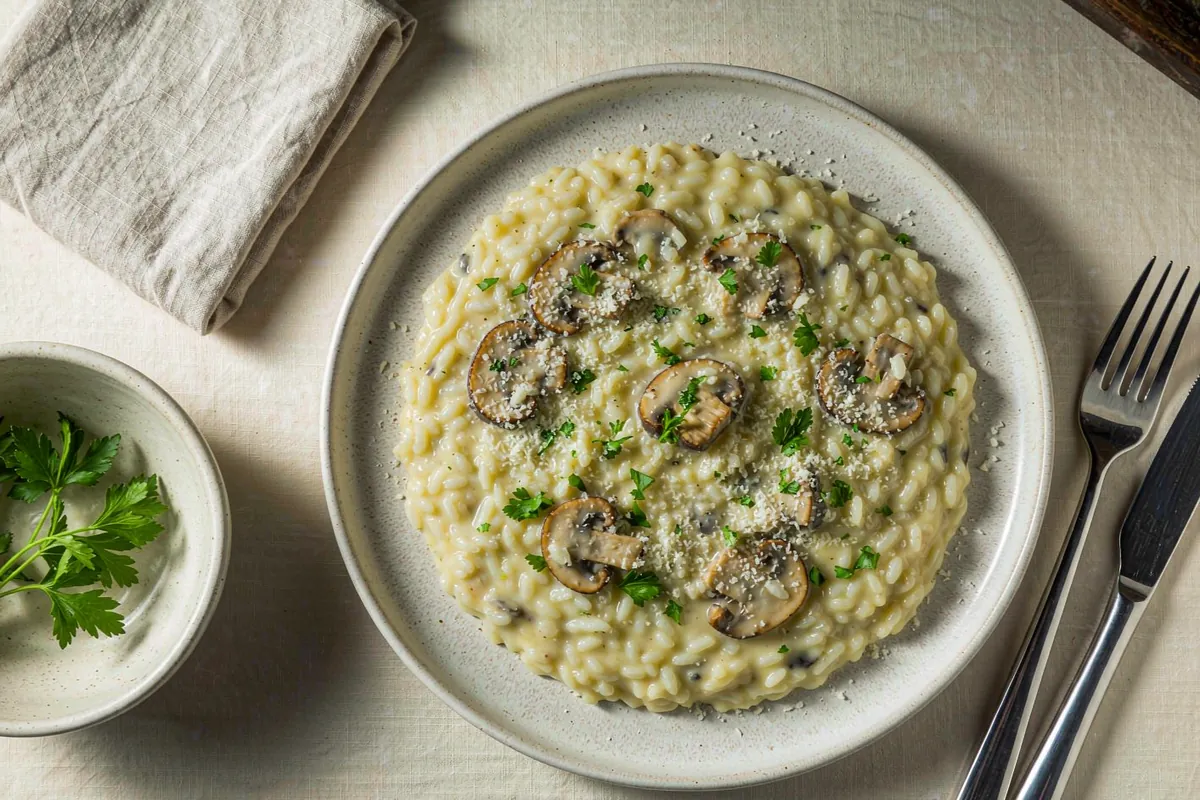
Arborio rice is stirred with warm stock until the grains release their starch, giving a loose, creamy texture with browned mushrooms and a sharp note of parmesan.
About this dish
Risotto rewards staying at the stove. Warm stock goes in one ladle at a time, and constant slow stirring rubs starch off each grain, which is what turns plain rice creamy without a drop of cream. Listen for the soft scrape of the spoon and the wet sigh as liquid is absorbed. The grains should stay faintly firm and the pan should ripple in loose waves when shaken. Pull it off the heat while it still looks a little too loose.
Before you start
Equipment: Skillet, Pot. Tap the ingredient checkboxes as you go.
Method
7 steps · tick each one off as you finish it.
Warm the stock
Pour 1200 ml stock into a pot and bring to a bare simmer over low heat, about 5 minutes. It is right when small bubbles creep up the sides and a thin thread of steam rises; a hard boil would cool every ladle later.
Brown the mushrooms
Heat 2 tbsp oil in a wide skillet over medium-high heat, add 250 g mushrooms in one layer and leave 4 minutes without stirring. They have had enough when the undersides are deep gold and their squeak turns to a soft hiss; season lightly.
Soften the onion
Lower the heat to medium, add 100 g diced onion and cook 4 minutes, stirring, until the pieces turn translucent and smell sweet rather than sharp. Lift out half the mushrooms and set them aside for garnish, leaving the rest in the pan.
Toast the rice
Add 320 g rice and stir over medium heat for 2 minutes until the grains look glassy at the centre, chalky at the edges, and click faintly against the pan. Pour in 60 ml wine and let it hiss away for 1 minute.
Add stock in ladles
Add hot stock one 150 ml ladle at a time, stirring slowly, and wait until each addition is absorbed before the next, about 18 minutes total. Call it done when a spoon dragged across the pan bottom leaves a dry track that fills in slowly.
Check the grains
After 18 minutes, bite a grain: it should be tender with a faint firm dot at the core, and the pan should ripple in loose waves when shaken. If the centre is still chalky, add another 100 ml stock and cook 2 minutes more.
Finish off the heat
Take the pan off the heat, beat in 50 g butter, 60 g cheese, 1 tsp salt and the reserved mushrooms for 30 seconds until glossy. Rest 2 minutes, then spoon onto plates; it should spread slowly in a soft mound, never a stiff heap.
Tips that matter
- Keep the stock at a bare simmer beside the rice; cold stock drops the pan temperature and stops the starch from releasing evenly.
- Stop stirring the moment the pan comes off the heat. Beating in cold butter and cheese off the flame gives the glossy all'onda ripple without splitting the emulsion.
Easy variations
- Fold 60 g cooked, squeezed spinach into the last 2 minutes for a green flecked risotto.
- Swap 300 ml of the vegetable stock for the soaking liquid from 20 g dried porcini and add the rehydrated mushrooms with the onion.
Questions that come up
Do I really have to stir risotto constantly?
Not every second, but frequent slow stirring rubs starch off the grains, which is what creates the creaminess. Stir after each ladle and keep the heat low enough that the rice never catches on the bottom.
Why is my risotto gluey and stiff?
It was overcooked or rested too long before serving. Pull it from the heat while it still looks slightly too loose, finish with butter off the flame, and serve within 2 minutes in warm shallow bowls.
Nutrition, roughly
| Energy | 510 kcal |
|---|---|
| Protein | 14 g |
| Carbohydrate | 72 g |
| Fat | 18 g |
Estimated per serving from standard ingredients, rounded. Treat it as a guide, not clinical data.
Boiling Noodles and Pasta Well
Salt, water volume, the two-minute window and the starchy cooking liquid that most home cooks pour down the sink.