Noodles East · Chinese home cooking
Napa Cabbage Stewed with Sweet Potato Noodles
Napa cabbage is stewed until silky and sweet, then chewy sweet potato noodles are folded into the shallow broth so they soak up the soy-scented liquid without losing their springy bite.
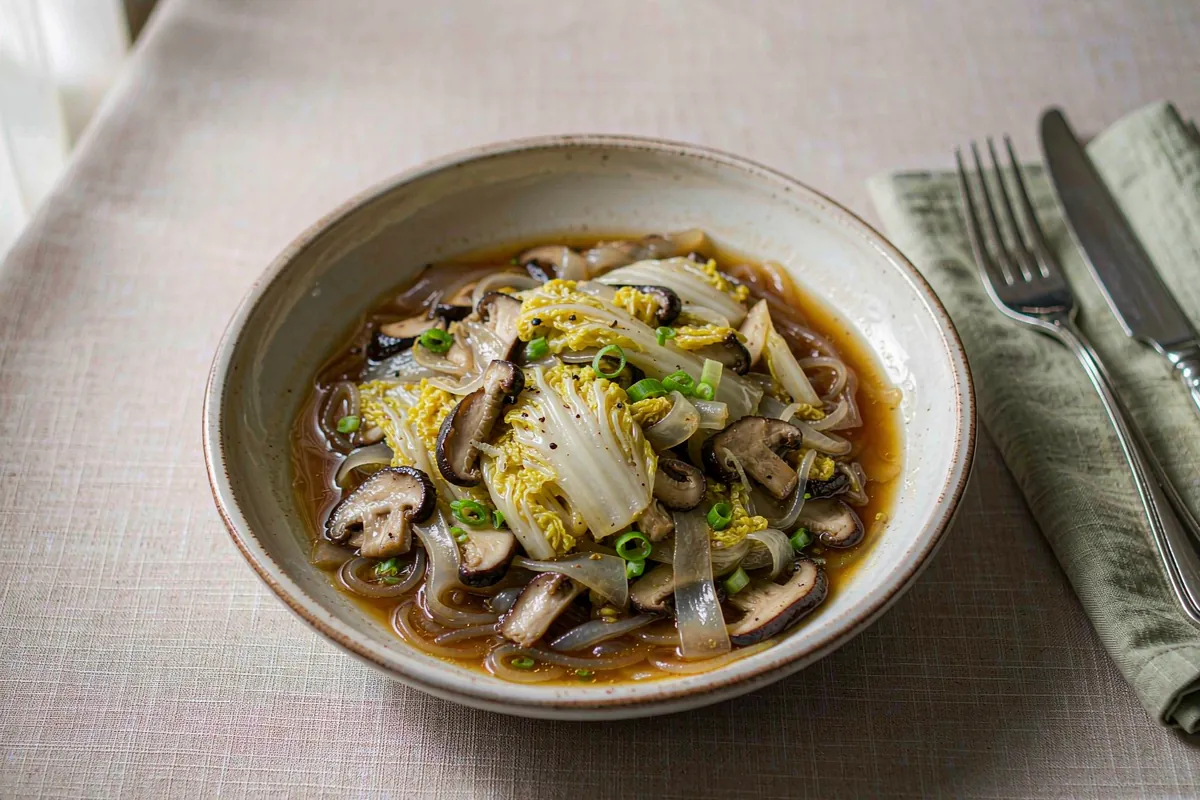
About this dish
Napa cabbage holds water, so this dish needs no stock at the start. Layered into a pot over low heat, the leaves collapse and release a sweet liquid of their own. Shiitake and garlic sit underneath and perfume it. The sweet potato noodles go in once there is enough juice to soften them; denser than wheat noodles, they turn from stiff and grey to glossy and translucent. The pot should finish loose and glossy, with cabbage soft enough to cut with a spoon and noodles still springy.
Before you start
Equipment: Pot, Wok. Tap the ingredient checkboxes as you go.
Method
7 steps · tick each one off as you finish it.
Soak the noodles
Off the heat, soak 200 g sweet potato noodles in 700 ml just-boiled water for 12 minutes, until pliable but still firm and grey. Drain, toss with 1 tsp sesame oil and snip into shorter lengths; they should look springy and separate, not sticky.
Fry the mushrooms
Set a wide pot over medium heat with 2 tbsp oil and fry 120 g shiitake and 20 g garlic for 3 minutes. Ready when the mushrooms soften, the garlic turns pale gold and the pot gives off a deep, woodsy smell.
Draw out the cabbage liquid
Pile in 600 g cabbage, cover the pot and cook over medium-low heat for 10 minutes, lifting the lid to stir twice. The moment to move on is when the leaves have collapsed to half their volume and a pool of clear, sweet liquid covers the base.
Season the braise
Stir in 1 tbsp light soy sauce, 1 tbsp dark soy sauce, 1 tsp sugar and 200 ml stock over medium heat, and simmer for 2 minutes. Ready once the liquid looks amber and tastes lightly sweet, with the cabbage holding its shape.
Stew the noodles
Add the drained noodles, spreading them over the cabbage, then cover and stew over low heat for 8 minutes. They have had enough when translucent, glossy and tinted amber, and a lifted strand springs back rather than sagging or snapping.
Reduce to a glaze
Uncover and toss everything over low heat for 90 seconds, until the liquid clings to the strands instead of pooling and you hear a soft, sticky sound. The cabbage should be soft enough to cut with the edge of a spoon.
Finish and rest
Take the pot off the heat, fold through 40 g scallions and 1/4 tsp white pepper, and rest 2 minutes. Serve when the scallions are just wilted but bright, the noodles stay springy and the whole pot looks glossy rather than soupy.
Tips that matter
- Soak the sweet potato noodles only until pliable; if they go fully soft in the water they will break into short pieces during the stew.
- Let the cabbage release its own liquid before adding any stock; pouring stock in early waterlogs the dish and washes out the sweetness.
Easy variations
- Add 150 g thin slices of pork belly with the shiitake for a richer, non-vegetarian pot.
- Stir 1 tbsp chilli bean paste into the soy mixture for a ruddy, gently spicy version.
Questions that come up
The noodles soaked up all the liquid and stuck. What now?
Splash in 80 ml hot stock over low heat and toss gently for 1 minute to loosen them. Next time keep the lid on during the 8-minute stew so the steam stays in the pot.
Can I use regular glass noodles instead?
Yes, but they soften faster. Reduce the soaking to 5 minutes and the stew to 4 minutes, then check early so they do not turn to mush.
Nutrition, roughly
| Energy | 310 kcal |
|---|---|
| Protein | 8 g |
| Carbohydrate | 58 g |
| Fat | 7 g |
Estimated per serving from standard ingredients, rounded. Treat it as a guide, not clinical data.
Boiling Noodles and Pasta Well
Salt, water volume, the two-minute window and the starchy cooking liquid that most home cooks pour down the sink.