Noodles East · Chinese home cooking
Noodles with Luffa and Shimeji
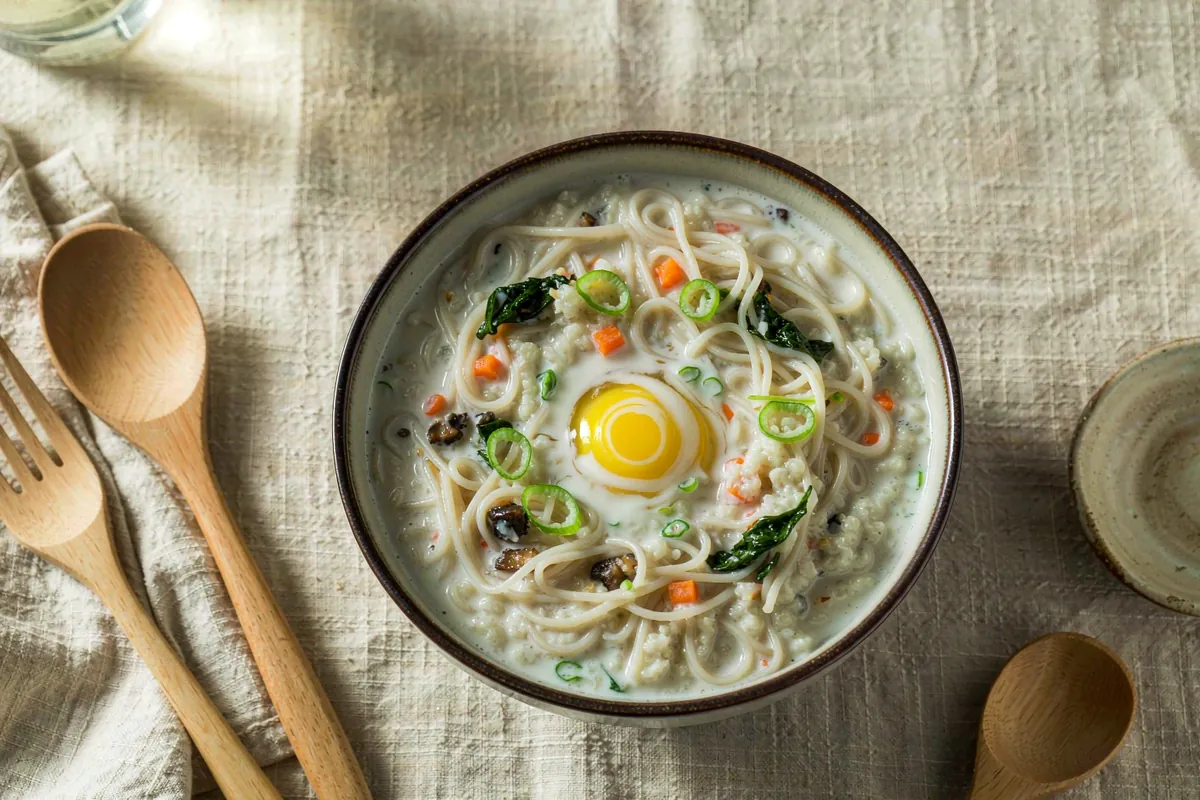
Luffa softens into a silky, mildly sweet vegetable while shimeji stays faintly crisp; thin noodles are folded into their light gingery broth for a gentle, quick bowl.
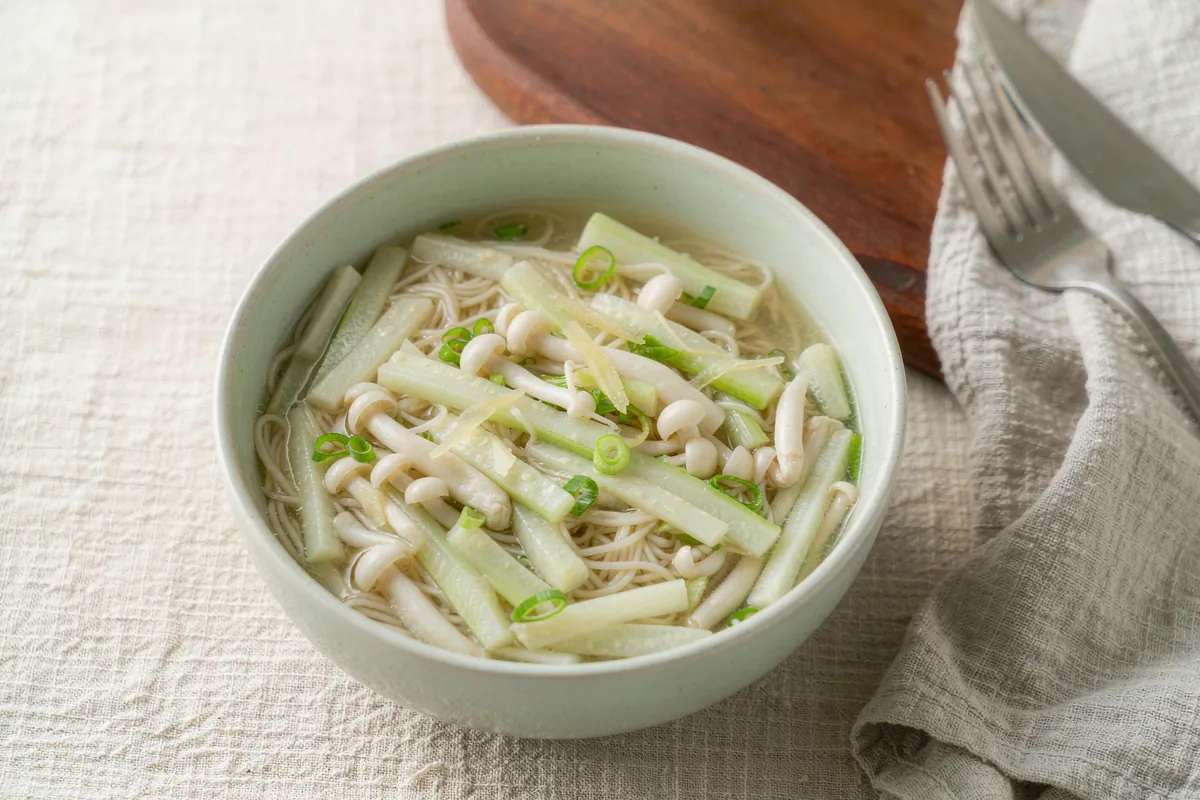
About this dish
Luffa is easy to overcook: too long on the heat and it goes watery, but caught right it turns silky, pale jade and faintly sweet. Shimeji joins it because the small caps keep a gentle crunch and a nutty smell. Ginger and a splash of stock make a light broth the noodles drink up. Move on when the luffa edges look translucent and the liquid bubbles quietly. The dish should finish loose and glossy, with mushrooms distinct and the green bright rather than olive.
Before you start
Equipment: Wok, Pot. Tap the ingredient checkboxes as you go.
Method
7 steps · tick each one off as you finish it.
Boil the noodles
Boil 240 g noodles with 1/2 tsp salt in a pot over high heat for about 4 minutes, until pliable but still firm. Drain, toss with 1 tbsp oil off the heat and spread out; the strands should look glossy and separate rather than tacky.
Sear the mushrooms
Heat a wok over medium-high heat with 2 tbsp oil and add 15 g ginger threads, stirring for 30 seconds until fragrant. Add 150 g shimeji and fry for 2 minutes, until the caps take on a pale gold edge and smell faintly nutty.
Start the luffa
Add 350 g luffa and toss over medium heat for 90 seconds, until the cut faces look glassy and the raw smell softens. Pour in 250 ml stock, 1 tbsp soy sauce and 1 tsp sugar; the liquid should reach halfway up the luffa.
Simmer gently
Cover the wok and simmer gently over medium-low heat for 5 minutes. It has had enough when the luffa has turned pale jade and translucent at the edges, a chopstick pierces a baton easily and the broth smells sweet rather than raw.
Fold in the noodles
Uncover, add the drained noodles and toss over medium heat for about 2 minutes, until the strands are tinted pale gold, heated through and the broth has thickened into a light glaze that clings rather than pools at the bottom.
Finish the glaze
Drizzle 1 tsp sesame oil and fold through 40 g scallions over low heat for 60 seconds. Stop when the scallions are just limp but still bright green, the luffa holds its shape and the mushrooms remain distinct and slightly springy.
Rest and serve
Take the wok off the heat and let it rest for 1 minute so the glaze settles. Call it done when the luffa stays silky and jade-green and the broth looks glossy and loose; serve in warm bowls with the ginger scent still present.
Tips that matter
- Peel luffa just before cooking; the cut flesh browns quickly once exposed to air and turns dull if it sits.
- Stop the simmer as soon as the edges go translucent. Another few minutes and the luffa collapses into watery threads.
Easy variations
- Swap shimeji for 150 g sliced oyster or button mushrooms, cooking them 1 minute longer to draw out their moisture.
- Add 120 g peeled prawns with the noodles for a fuller bowl, tossing until they just turn pink and firm.
Questions that come up
My luffa turned brown and mushy. Why?
It was peeled too early or simmered too long. Peel right before cooking and keep the covered simmer to 5 minutes, checking at 4 so the edges stay pale jade.
Can I make this without stock?
Yes. Use 250 ml water plus 1 extra tsp soy sauce, though the broth will be lighter. The luffa releases its own liquid, so the pan will not be dry.
Nutrition, roughly
| Energy | 365 kcal |
|---|---|
| Protein | 12 g |
| Carbohydrate | 58 g |
| Fat | 10 g |
Estimated per serving from standard ingredients, rounded. Treat it as a guide, not clinical data.
Boiling Noodles and Pasta Well
Salt, water volume, the two-minute window and the starchy cooking liquid that most home cooks pour down the sink.