Congee, Porridge & Oats · Chinese home cooking
Plain Rice Congee
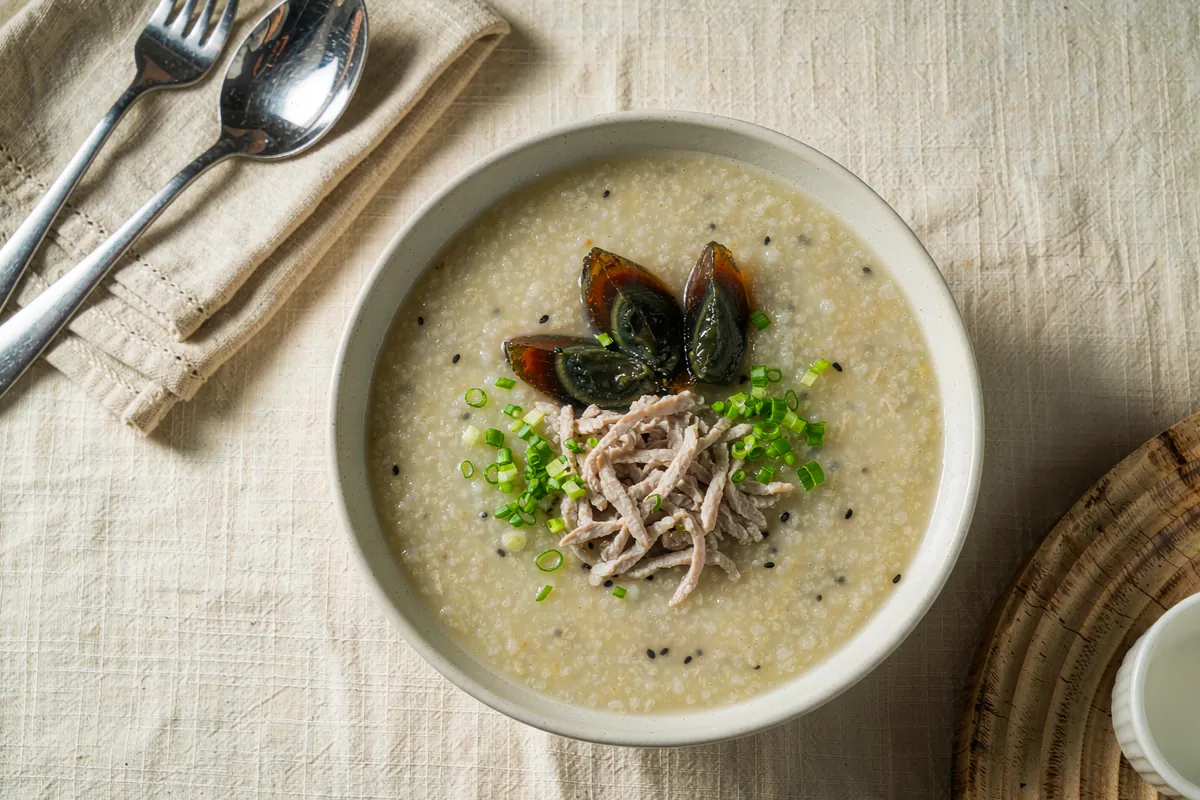
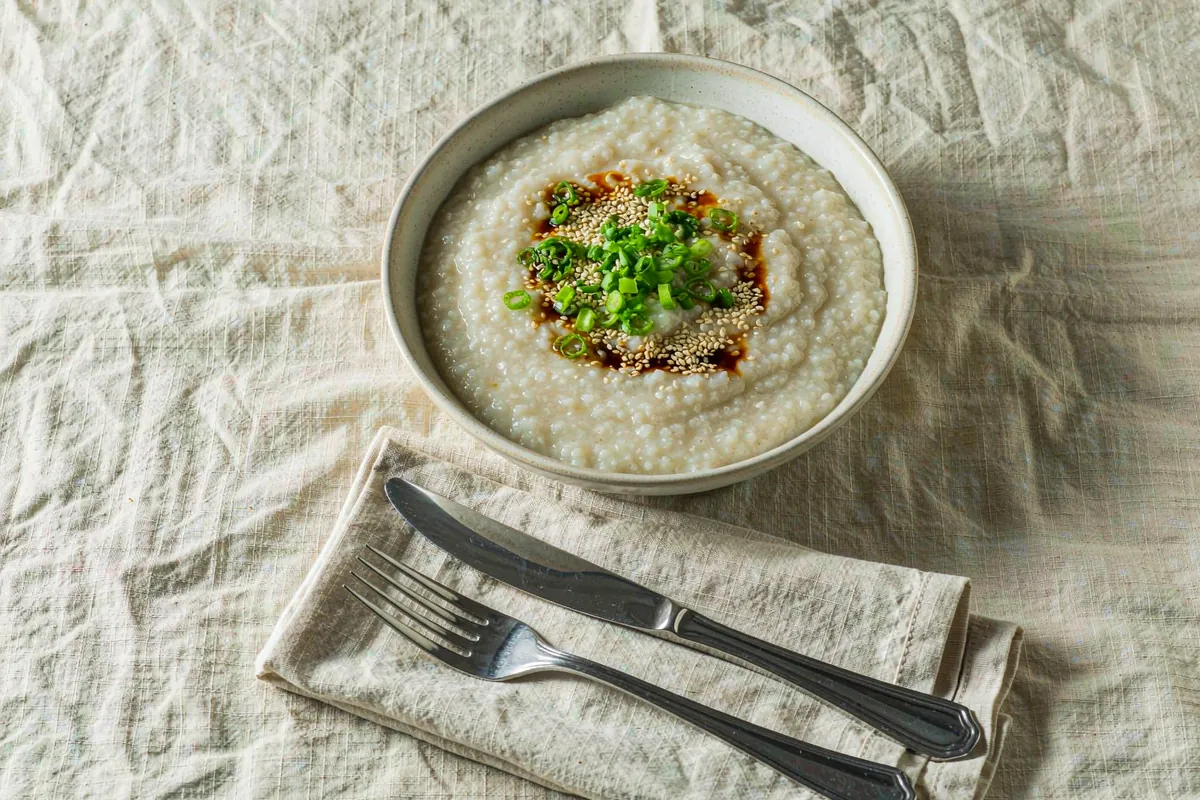
Long, gentle simmering breaks rice down into a silky, mildly sweet porridge with a glossy sheen, finished simply with scallions, sesame oil and a pinch of salt.
About this dish
Congee is more about patience than recipe. A handful of rice and plenty of water will do the work, but only if the heat stays low enough that the surface barely trembles; a rolling boil splits the grains into grit instead of a smooth suspension. Some cooks freeze the rinsed rice first, so ice crystals crack each grain and it collapses faster. Move on when a spoon dragged through leaves a trail that closes slowly. The smell is faint, clean, like warm rice water.
Before you start
Equipment: Pot. Tap the ingredient checkboxes as you go.
Method
6 steps · tick each one off as you finish it.
Rinse and soak
Rinse the rice in a sieve for 60 seconds until the water runs clear, then drain. Mix with 1 tsp oil and soak in 200 ml of the measured water for 30 minutes; the grains turn opaque and swell slightly, which shortens the simmering time.
Bring to a boil
Tip the rice and its soaking water into a 2.5 litre pot, add the remaining 1.6 litres water and the ginger. Bring to a full boil over high heat, about 8 minutes, stirring twice so nothing settles and catches on the base.
Drop to a bare simmer
Turn the heat to the lowest setting and set the lid slightly ajar. The surface should show small lazy bubbles, not a rolling boil, for 40 minutes. Stir from the bottom every 10 minutes; the mixture will thicken from cloudy water to a thin cream.
Check the texture
Fish out the ginger. The grains should have burst open and lost their shape, and a spoon dragged across the surface should leave a channel that closes over 3 or 4 seconds. If it closes instantly, simmer 8 minutes more with 100 ml hot water.
Season quietly
Stir in the salt for 1 minute until it disappears. Taste: the congee should read as gently sweet and clean, with salt only in the background. Turn off the heat and let it stand 5 minutes; it will thicken a little more as it settles.
Ladle and finish
Ladle into warm bowls; the surface should hold a soft gloss and a faint skin at the rim. Add a few drops of sesame oil, a splash of soy, scallions, sesame seeds and white pepper at the table so each bowl can be adjusted.
Tips that matter
- Freeze the rinsed, drained rice for 1 hour before cooking; the ice cracks the grains and cuts roughly 10 minutes off the simmer.
- Congee thickens as it cools. Loosen leftovers with 60 to 80 ml water per bowl when reheating, stirring over low heat until it flows again.
Easy variations
- Swap 300 ml of the water for unsweetened soy milk at the end for a rounder, creamier body; do not boil it after adding.
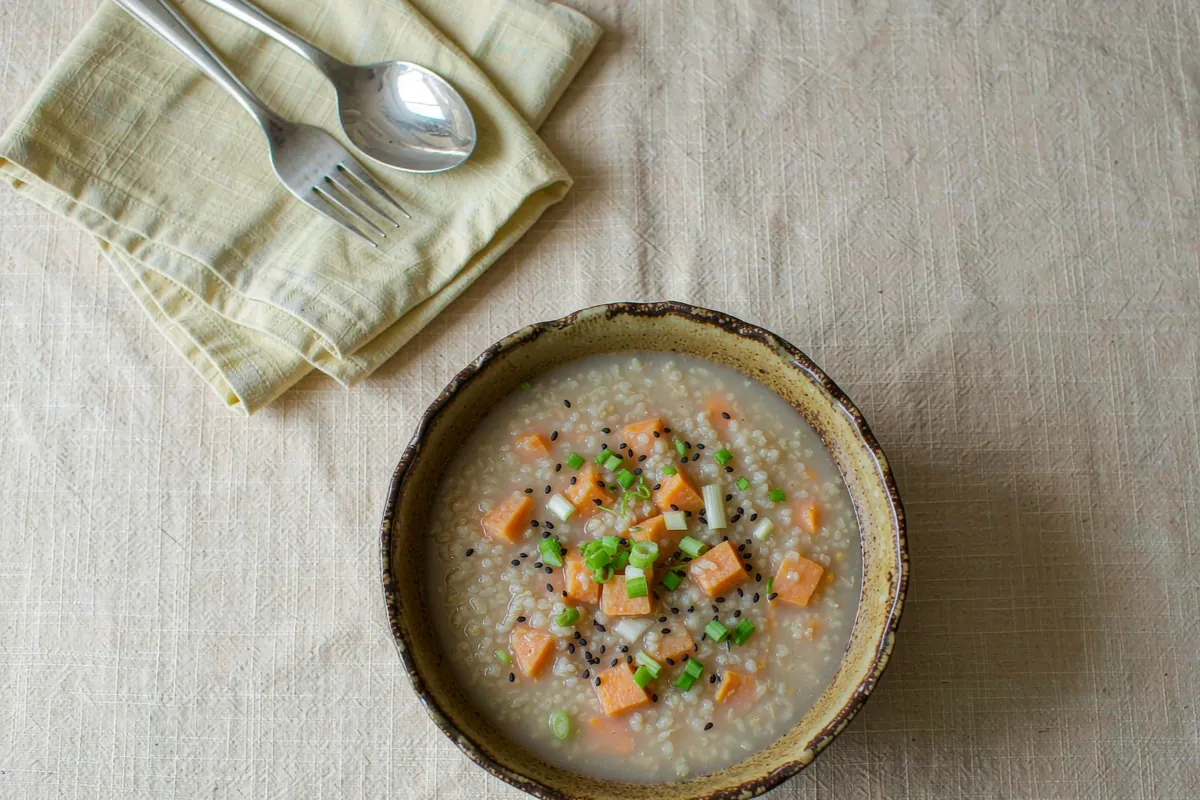
- Add 100 g peeled squash cubes with the ginger for a faint sweetness and a pale gold colour.
Questions that come up
Why does my congee stick and scorch on the bottom?
The heat was too high or stirring stopped. Keep the lid ajar, use the smallest burner and scrape the base with a flat spatula every 10 minutes.
Can I make it in a rice cooker?
Yes, on the porridge setting with the same 1:12 rice-to-water ratio by weight. Stir once halfway through and leave it on warm for 15 minutes before serving.
Nutrition, roughly
| Energy | 190 kcal |
|---|---|
| Protein | 4 g |
| Carbohydrate | 40 g |
| Fat | 3 g |
Estimated per serving from standard ingredients, rounded. Treat it as a guide, not clinical data.
A Staple Cupboard That Earns Its Space
A short list of grains, flours and dried noodles, how long they actually keep, and what each one can become once it reaches the pan.