Congee, Porridge & Oats · Chinese home cooking
Pork and Carrot Congee
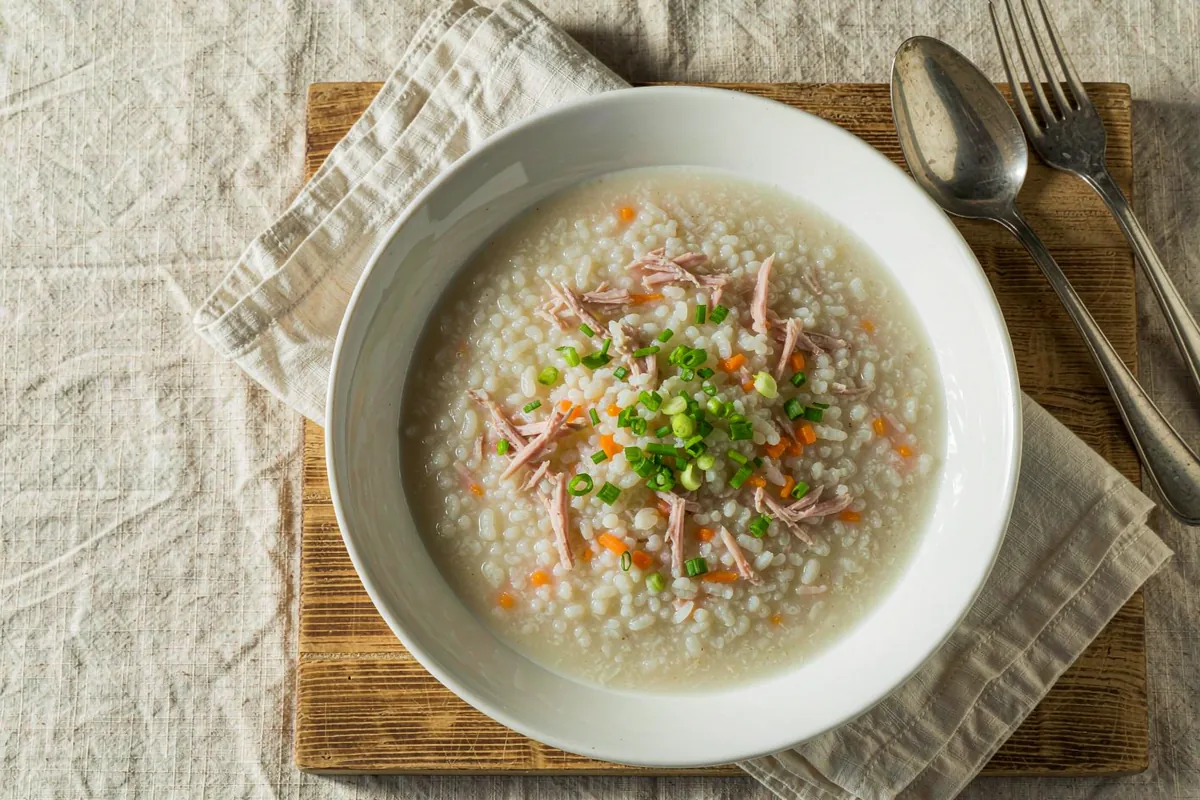
Lean pork shreds and sweet carrot matchsticks simmer into a soft rice base; a short marinade keeps the meat tender, while ginger and scallion added at the end give the bowl a clean, bright finish.
About this dish
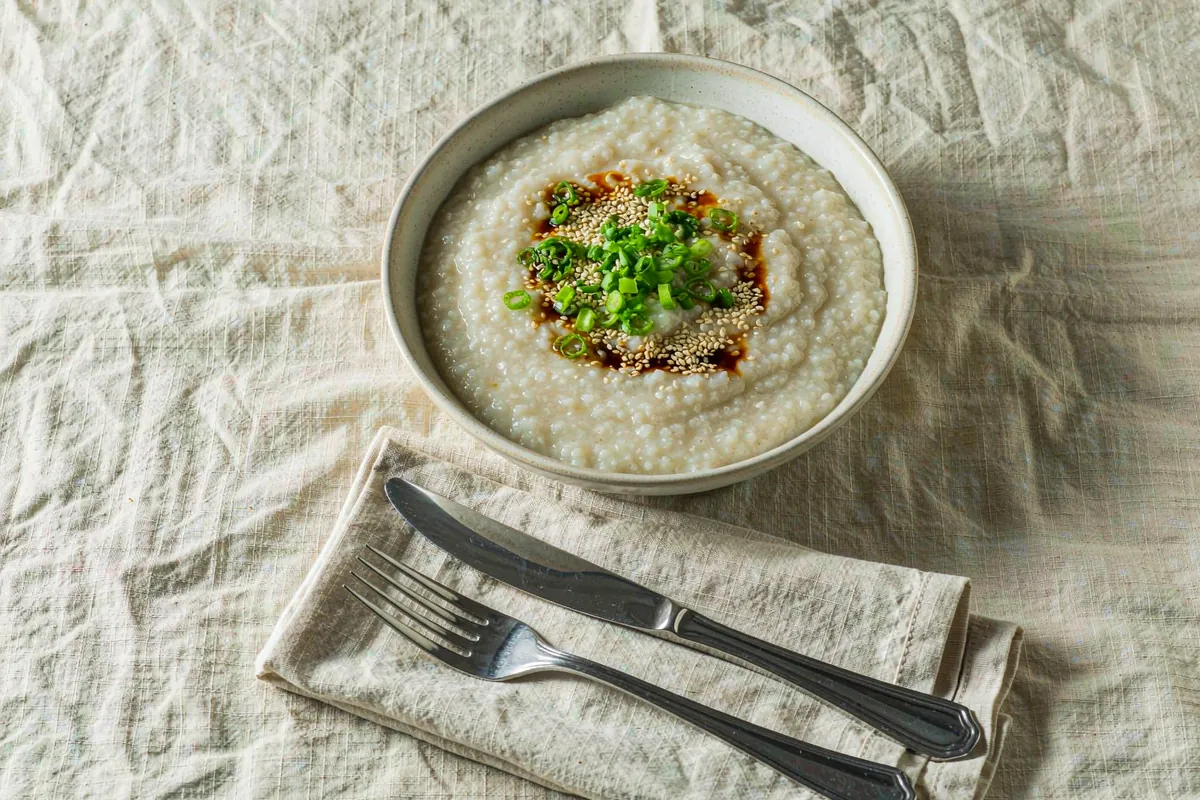
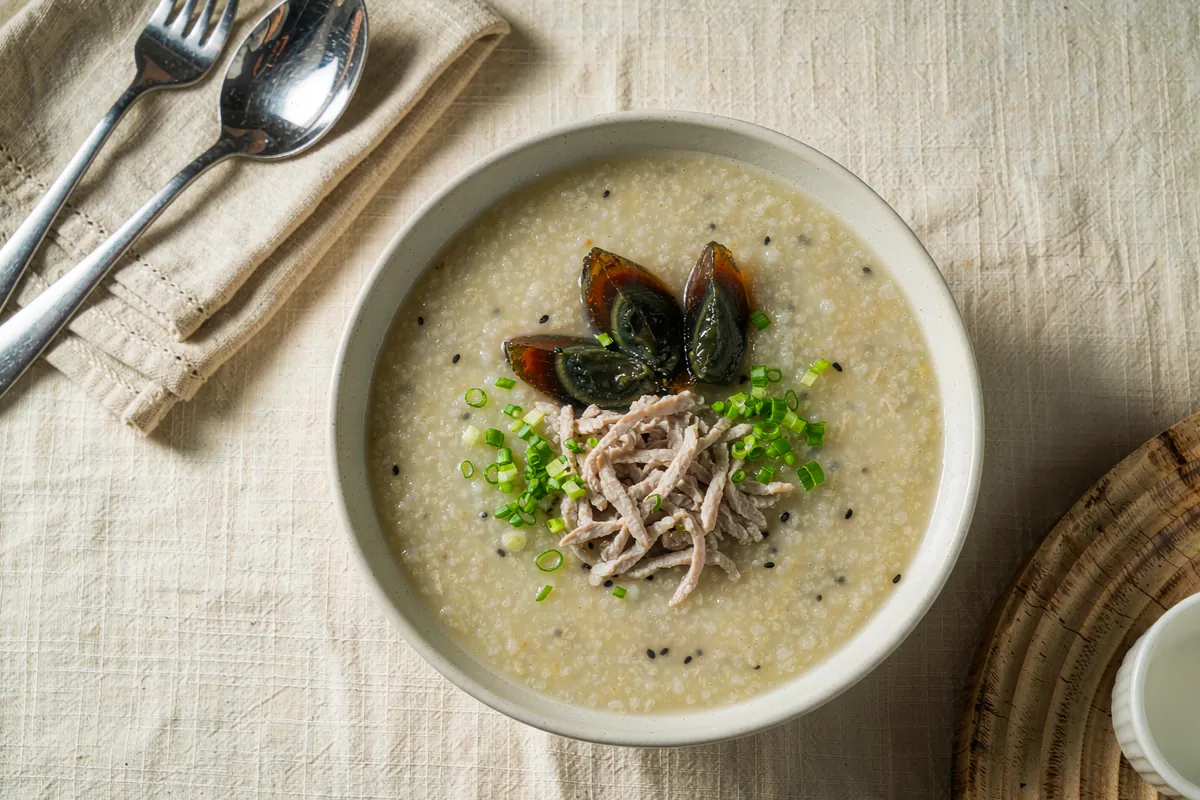
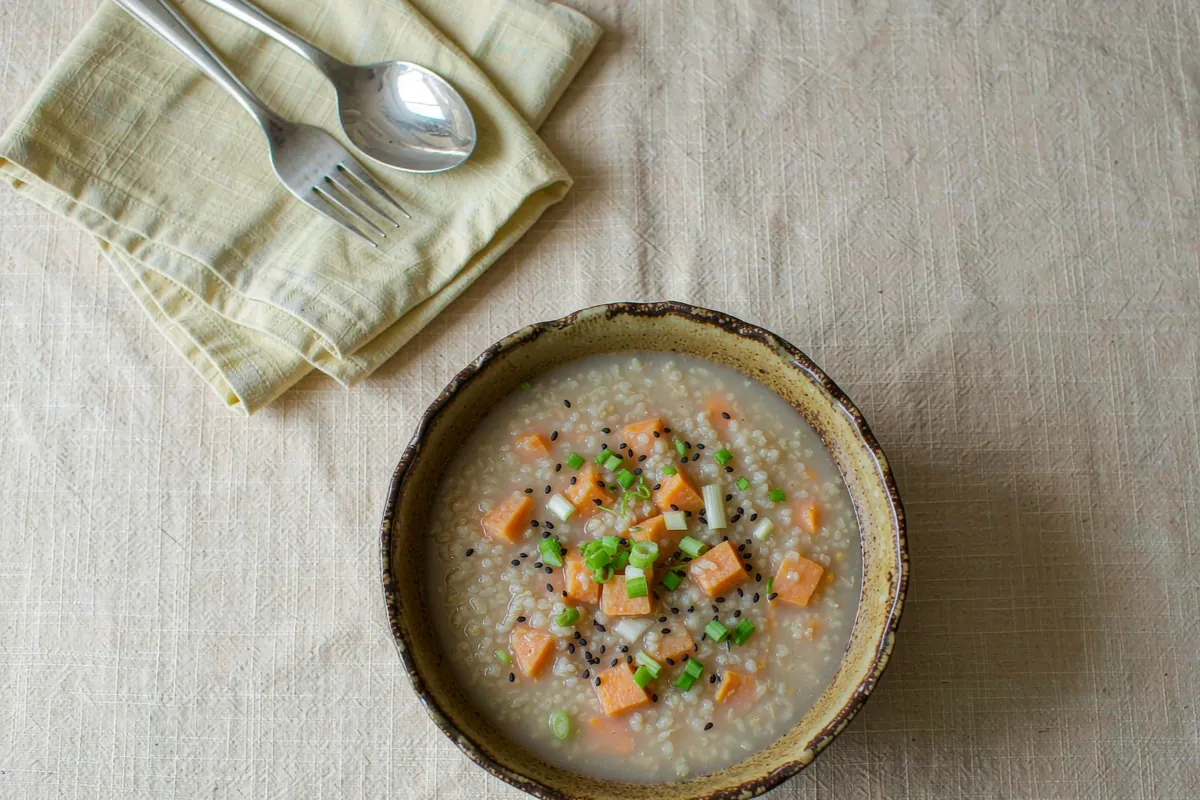
Pork for congee should be cut small enough to vanish into the spoon, not sit on top. A brief toss with soy sauce and cornflour coats each shred, so it stays slippery after fifteen minutes in the pot. Carrot goes in early enough to sweeten the broth but late enough to keep a faint orange edge. Listen for the low, wet tick of a simmer; a rolling boil shreds the meat into fibres. The smell is ginger and warm rice, with scallion arriving at the table.
Before you start
Equipment: Pot. Tap the ingredient checkboxes as you go.
Method
7 steps · tick each one off as you finish it.
Season the pork
Off the heat, toss 220 g pork shreds with 1 tbsp soy sauce, 2 tsp cornflour and 1 tbsp oil for about 2 minutes. You will see it is ready when every strand looks glossy and no dry white patches of starch remain.
Start the rice
Put 200 g rinsed rice, 1800 ml cold water and 10 g ginger threads into a heavy pot over high heat for 10 minutes. Ready once the surface throws steady bubbles and the grains no longer cling to the base.
Turn it low
Drop the heat to low, set the lid ajar and let the 200 g rice simmer for 25 minutes, scraping the bottom every 8 minutes. You will know it is right when the grains have burst and the liquid looks creamy rather than clear.
Add the carrot
Stir in 120 g carrot matchsticks and 1/2 tsp salt, keeping the heat low for a further 8 minutes. Move on when a matchstick bends without snapping and the orange has bled faintly into the surrounding broth.
Slip in the pork
Scatter 220 g seasoned pork across the surface in one layer, leave it undisturbed over low heat for 90 seconds, then fold it through for 2 minutes. You can tell it is done when no pink remains and the shreds float separately.
Finish the aromatics
Take the pot off the heat and stir in 60 g scallion whites for 30 seconds, then let it rest covered for 3 minutes. It has had enough when the raw onion smell has gone and the congee has thickened enough to coat a spoon.
Serve
Off the heat, ladle into four bowls and scatter 60 g scallion greens on top within 2 minutes of serving. It is right when the greens stay bright and sit on the surface instead of sinking into the porridge.
Tips that matter
- Cut the pork across the grain and chill it for 20 minutes first; firm meat shaves into far finer shreds than a warm, floppy piece.
- If the congee tightens before the pork goes in, add 150 ml boiling water rather than cold, which would stop the starch from loosening evenly.
Easy variations
- Replace half the carrot with 80 g diced daikon for a milder, almost peppery sweetness and a paler bowl.
- For a deeper colour, stir 1 tsp dark soy sauce into the finished pot off the heat and skip the salt.
Questions that come up
Why did my pork turn out tough and stringy?
It was probably boiled hard or added too early. Keep the heat at a bare simmer, lay the shreds on top for 90 seconds before folding, and take the pot off the heat as soon as the pink disappears.
Can I use leftover cooked rice?
Yes. Use 400 g cooked rice with 1200 ml water and cut the initial simmer to 15 minutes, since the grains are already soft; add the carrot at the same point and watch for burst grains.
Nutrition, roughly
| Energy | 310 kcal |
|---|---|
| Protein | 18 g |
| Carbohydrate | 44 g |
| Fat | 7 g |
Estimated per serving from standard ingredients, rounded. Treat it as a guide, not clinical data.
A Staple Cupboard That Earns Its Space
A short list of grains, flours and dried noodles, how long they actually keep, and what each one can become once it reaches the pan.