Congee, Porridge & Oats · Chinese home cooking
Red Bean Job S Tears and Black Rice Porridge
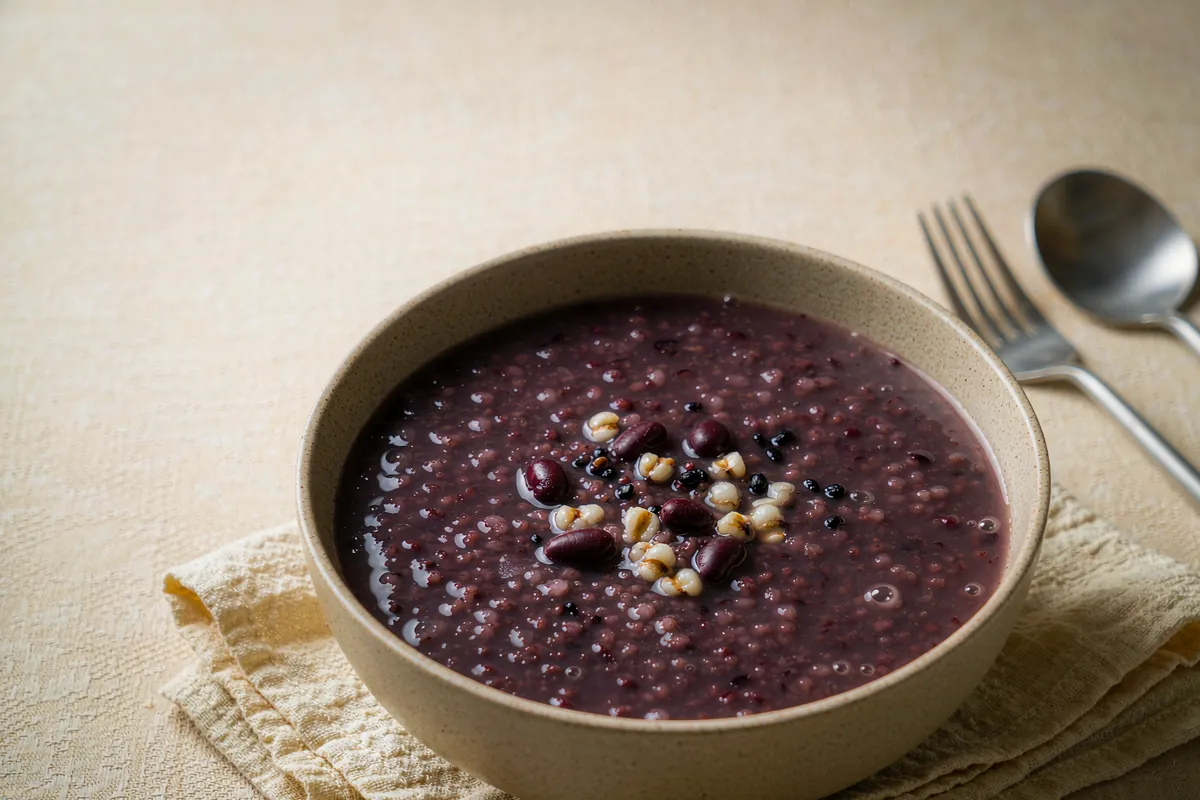
Red beans, job's tears and black rice simmer into a purple porridge; the beans soften to a mealy sweetness, the grains keep a slight chew, and rock sugar rounds off the earthy edge.
About this dish
Three grains in one pot means three different softening times, so this porridge rewards patience rather than any special skill. Black rice bleeds its inky purple into the water first, turning the pot a dull violet long before the beans are tender. Job's tears stay bouncy and taste faintly of bran; red beans split and thicken everything around them. The smell while it simmers is damp and mineral, like wet stone, with sweetness arriving only at the end. Stir from the bottom, because the heavy beans settle and catch.
Before you start
Equipment: Pot. Tap the ingredient checkboxes as you go.
Method
7 steps · tick each one off as you finish it.
Soak and rinse
With the pot off the heat, drain 120 g red beans and rinse 100 g job's tears and 80 g black rice for 3 minutes. You will know the grains are ready when the runoff is faintly tinted, not thick and inky.
First boil
Combine 120 g beans, 2000 ml cold water and 10 g ginger in a heavy pot over high heat for 12 minutes. The cue is simple: the beans rise and fall in the boil and a grey foam gathers at the rim; skim it.
Add the grains
Lower the heat and tip in 100 g job's tears and 80 g black rice, simmering with the lid ajar for 45 minutes, stirring every 15. You will know it is right when the water has turned a flat violet.
Check the beans
Keep the heat low for 15 minutes, then test by pressing one bean against the pot with a spoon. It is done when 120 g of beans split easily and the job's tears still offer a faint resistance at the centre.
Sweeten
Stir in 50 g crushed rock sugar, 1/4 tsp salt and 2 tbsp dried orange peel over the lowest heat for 8 minutes. Wait until no sugar crystals remain and a citrus smell lifts above the mineral one.
Loosen off the heat
Remove the pot from the heat and work in 150 ml hot water, a little at a time, for about 2 minutes. You will know the texture is right when the spoon leaves a slow-closing furrow and the grains stay suspended.
Rest and serve
Cover and rest off the heat for 6 minutes, then ladle into four bowls and dust with 1 tbsp black sesame seeds. The moment to move on is when the surface has a dull matte sheen and the purple has deepened rather than faded.
Tips that matter
- Soak the red beans overnight; unsoaked beans need roughly 30 extra minutes and will still leave the job's tears overcooked by the time they soften.
- Rinse black rice gently in two changes of water only, or you wash away the pigment that gives this porridge its colour.
Easy variations
- Add 40 g peeled and diced fresh lotus root with the grains for a crisp note that survives the long simmer.
- Swap the rock sugar for 60 g chopped dried jujubes and reduce the water by 100 ml for a fruit-sweetened bowl.
Questions that come up
Why is the porridge still watery after an hour?
Black rice and job's tears hold their shape, so they thicken slowly. Mash a ladleful of beans against the side of the pot and simmer 10 minutes more with the lid off; it will come together.
Can I cook the grains together from the start?
You can, but the job's tears will turn mushy before the beans soften. Adding them 12 minutes in keeps a bit of chew; if you do combine everything, cut the total simmer to 55 minutes.
Nutrition, roughly
| Energy | 290 kcal |
|---|---|
| Protein | 9 g |
| Carbohydrate | 57 g |
| Fat | 2 g |
Estimated per serving from standard ingredients, rounded. Treat it as a guide, not clinical data.
A Staple Cupboard That Earns Its Space
A short list of grains, flours and dried noodles, how long they actually keep, and what each one can become once it reaches the pan.