Noodles East · Chinese home cooking
Scallion Oil Noodles
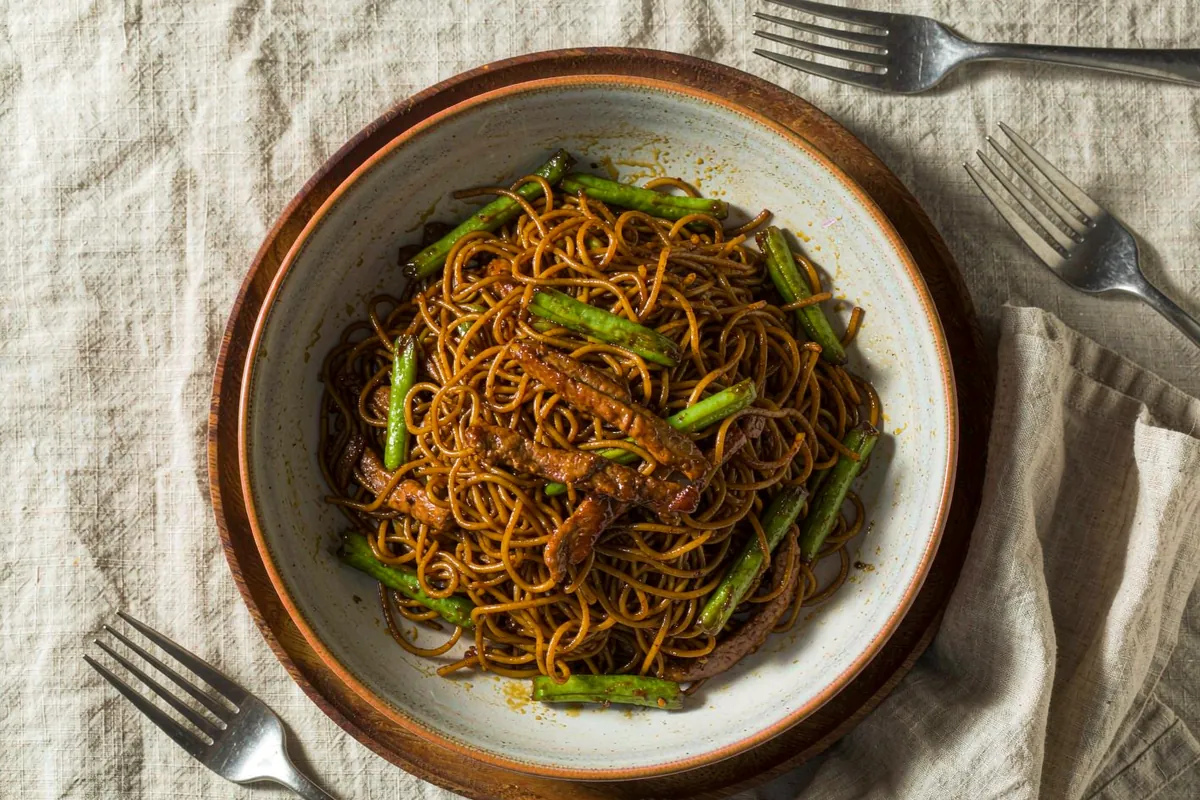
Wheat noodles tossed with slowly fried scallions, their amber oil and a soy-sugar glaze, finished with crisp dark green scallion threads and a sharp, savoury smell.
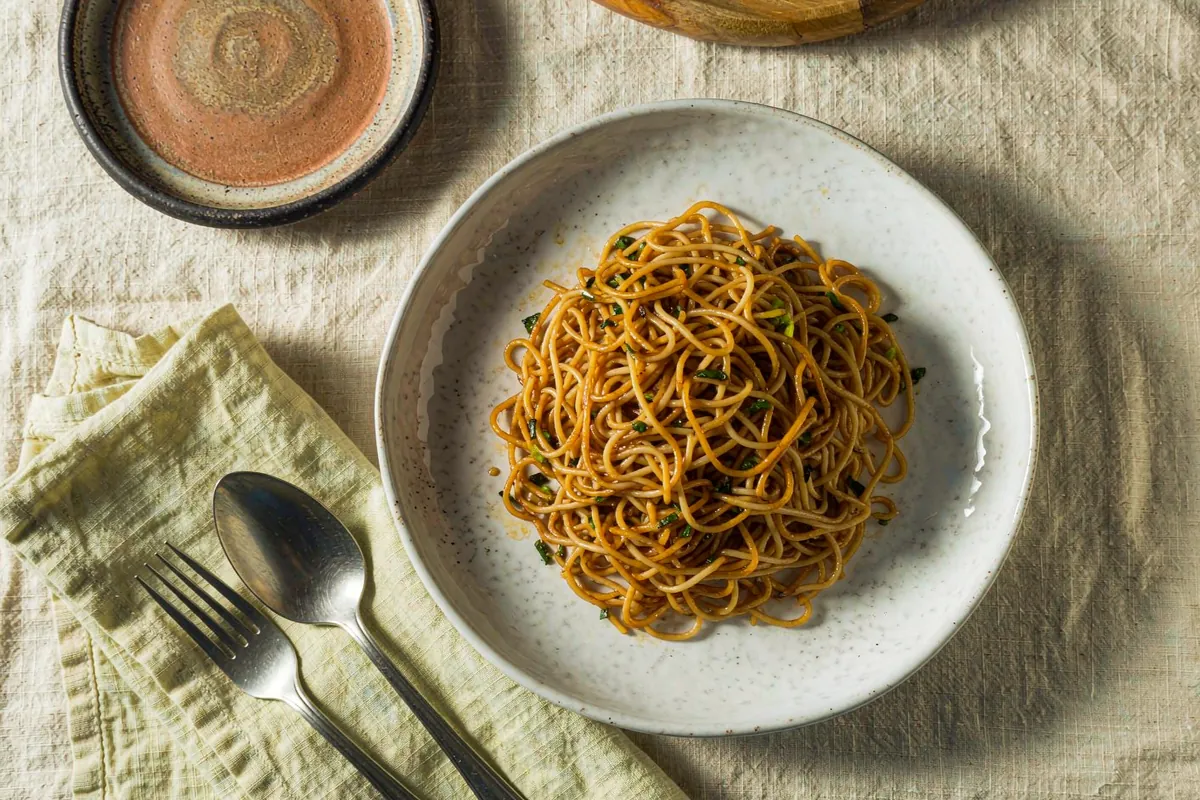
About this dish
Everything depends on patience with a pan of oil. Scallions go in cold and cook slowly, first hissing as they give up water, then quietening as they turn from bright green to amber and crisp. Rush it and you get burnt, bitter shreds; hold it low and the oil becomes the seasoning, sweet and oniony. Separate whites from greens, because they brown at different speeds. When hot oil hits the soy sauce in the bowl you hear one loud crackle and smell caramel at once. Toss fast.
Before you start
Equipment: Skillet, Pot. Tap the ingredient checkboxes as you go.
Method
7 steps · tick each one off as you finish it.
Cut and dry
Cut the scallions into 5 cm lengths, splitting thick white stalks lengthwise. Keep whites, pale greens and dark greens in separate piles. Pat everything completely dry with a towel; any water left on the surface will spit violently when it meets the oil.
Start cold
Put 180 ml oil, the shallot, garlic and all the scallion whites in a cold 24 cm skillet. Set over medium-low heat. You should see small bubbles rise within 3 minutes and hear a gentle hiss, never a hard crackle or smoke.
Fry in stages
Cook 12 minutes, stirring every 3 minutes, until the whites are limp and pale gold. Add the pale greens and cook 6 minutes more, then the dark greens for a final 4 minutes. The pieces should be amber and crisp, not black.
Strain and reserve
Lift out the fried scallions with a slotted spoon and spread on kitchen paper; they crisp further as they cool. Pour the oil into a heatproof jug. You should have roughly 150 ml of clear amber oil that smells sweet and oniony.
Mix the sauce
Whisk the light and dark soy, sugar, 2 tbsp water and sesame oil in a small bowl for 30 seconds until the sugar dissolves. Divide between two serving bowls. The mixture should look dark and glossy, with no sugar grains at the bottom.
Boil the noodles
Boil 1.5 litres water with 1 tsp salt. Add the noodles and cook 3 to 4 minutes for dried, 2 for fresh, until a strand is springy with no white core. Drain but do not rinse; the surface starch helps the sauce cling.
Sizzle and toss
Reheat 120 ml of the scallion oil in the skillet until it shimmers, about 90 seconds, then pour it directly over the sauce in each bowl; it will crackle loudly. Add the hot noodles, toss 8 times and crown with the crisp scallion threads.
Tips that matter
- Store the strained oil and crisp scallions separately in jars in the fridge for up to two weeks; the oil firms when cold, so let it stand at room temperature for 20 minutes.
- Use a heavy skillet and medium-low heat throughout. If the oil begins to smoke, pull the pan off the heat for 30 seconds rather than stirring faster.
Easy variations
- Add 80 g peeled shrimp, poached in the noodle water, and toss them with the noodles for a fuller plate.
- Stir 1 tsp chilli crisp into the sauce before adding the hot oil for a warmer, spicier bowl.
Questions that come up
Why are my scallions bitter and black?
The heat was too high. Start them in cold oil on medium-low, expect 20 to 22 minutes total, and pull the pan off the heat the moment the pieces turn amber.
Can I make the oil ahead?
Yes, and it improves. Keep the strained oil refrigerated for up to two weeks and reheat 120 ml per two bowls until it shimmers before pouring.
Nutrition, roughly
| Energy | 620 kcal |
|---|---|
| Protein | 13 g |
| Carbohydrate | 78 g |
| Fat | 29 g |
Estimated per serving from standard ingredients, rounded. Treat it as a guide, not clinical data.
Boiling Noodles and Pasta Well
Salt, water volume, the two-minute window and the starchy cooking liquid that most home cooks pour down the sink.