Flatbreads & Griddle · Chinese home cooking
Scallion Pancakes
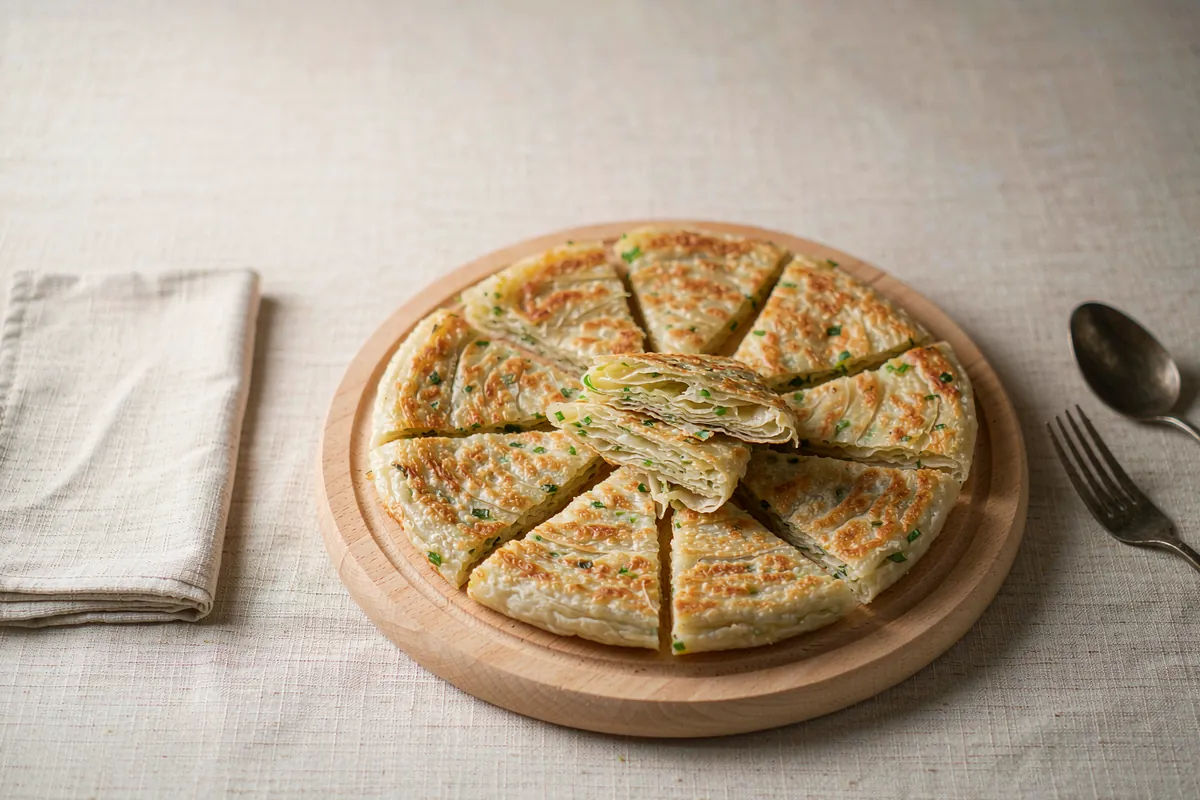
Hot water dough, a rolled coil of scallions and a shallow fry give a pancake that shatters into flaky layers while staying chewy at its centre.
About this dish
The trick is a hot-water dough: boiling water gelatinises the flour, so the dough feels soft and tacky under your palm instead of springing back. After a thirty-minute rest it rolls out thin without shrinking. Brush the surface with oil, scatter scallions, roll the sheet into a tight spiral and flatten it; that coil bakes into separate, papery layers. In the pan you will hear a low hiss as moisture escapes and smell the scallions turning sweet. The top should blister in pale gold patches before you flip.
Before you start
Equipment: Skillet. Tap the ingredient checkboxes as you go.
Method
7 steps · tick each one off as you finish it.
Mix the hot-water dough
Pour the 180 ml hot water over the flour and salt and stir with chopsticks until no dry patches remain, about 1 minute. Add 1 tbsp oil and knead 3 minutes until smooth, soft and tacky, like an earlobe.
Rest the dough
Cover the bowl with a damp cloth and leave the dough for 30 minutes at room temperature. It will relax from a tight ball into a slack, slightly sticky one that presses flat with a finger and no longer springs back.
Shape the scallion coil
Divide into 4 pieces of about 120 g. Roll one to a 24 cm round, brush with 1/2 tbsp oil, scatter a quarter of the scallions and sesame oil, then roll into a tight rope and coil it into a spiral; flatten gently.
Roll out the pancakes
On a lightly floured board, press each spiral into a 18 cm disc about 4 mm thick, rolling from the centre outward. Keep the layers visible as faint green rings; if dough tears, pinch it closed with a dab of flour.
Heat the skillet
Set a 26 cm cast-iron skillet over medium heat for 3 minutes, until a drop of water sizzles and dries in 2 seconds. Add 1 tbsp oil and swirl to coat; the surface should shimmer but not smoke.
Pan-fry both sides
Lay in one pancake; it should hiss immediately. Fry 2-3 minutes until the underside is deep gold in patches and the top looks dry and blistered, then flip and press with a spatula for another 2 minutes until both sides crackle when tapped.
Rest and serve
Transfer to a wire rack for 2 minutes so steam escapes and the layers stay crisp, then stack and cut into 6 wedges. The cut face should show thin, separate sheets with green scallion threads between them.
Tips that matter
- If the dough shrinks back as you roll, cover it and rest 10 minutes more; the gluten has not relaxed enough.
- Keep the cooked pancakes in a single layer on a rack, never stacked under a lid, or trapped steam will soften the flaky edges.
Easy variations
- Rub 1 tsp ground Sichuan pepper into the oiled surface before adding the scallions for a tingling, fragrant version.
- Scatter 40 g finely chopped cooked shrimp over the filling and fry 1 minute longer on each side.
Questions that come up
Why are my pancakes dense instead of flaky?
Usually the spiral was rolled loosely or the dough was too dry. Roll the coil tight, keep the dough soft and tacky, and press the pancake flat in the pan so the layers separate.
Can I freeze the shaped pancakes?
Yes. Stack the raw discs between sheets of baking paper and freeze for up to a month; cook from frozen over medium-low heat, adding 2 minutes per side.
Nutrition, roughly
| Energy | 320 kcal |
|---|---|
| Protein | 7 g |
| Carbohydrate | 40 g |
| Fat | 14 g |
Estimated per serving from standard ingredients, rounded. Treat it as a guide, not clinical data.
Flour, Water and Rest: Working with Wheat Dough
The three states of a simple dough, how hydration changes them, and why resting time is an ingredient rather than a pause.