Noodles East · Chinese home cooking
Soft Vegetable and Egg Noodles
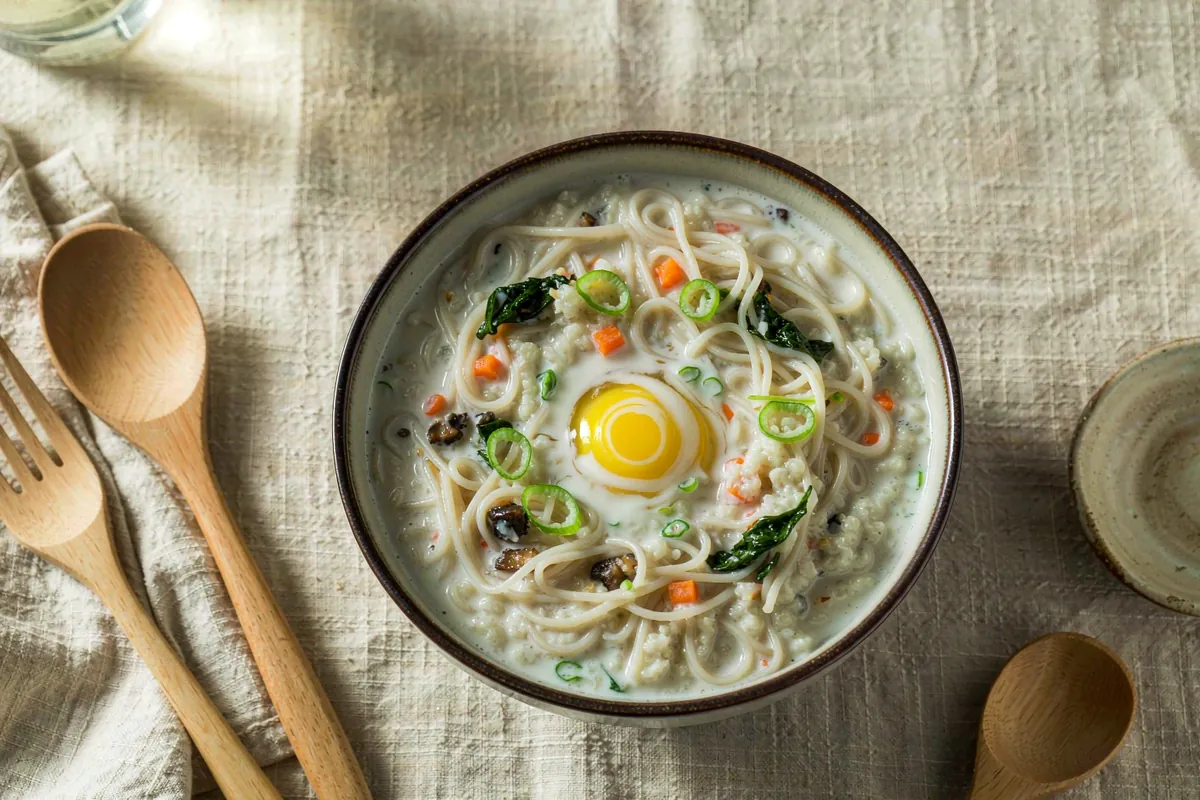
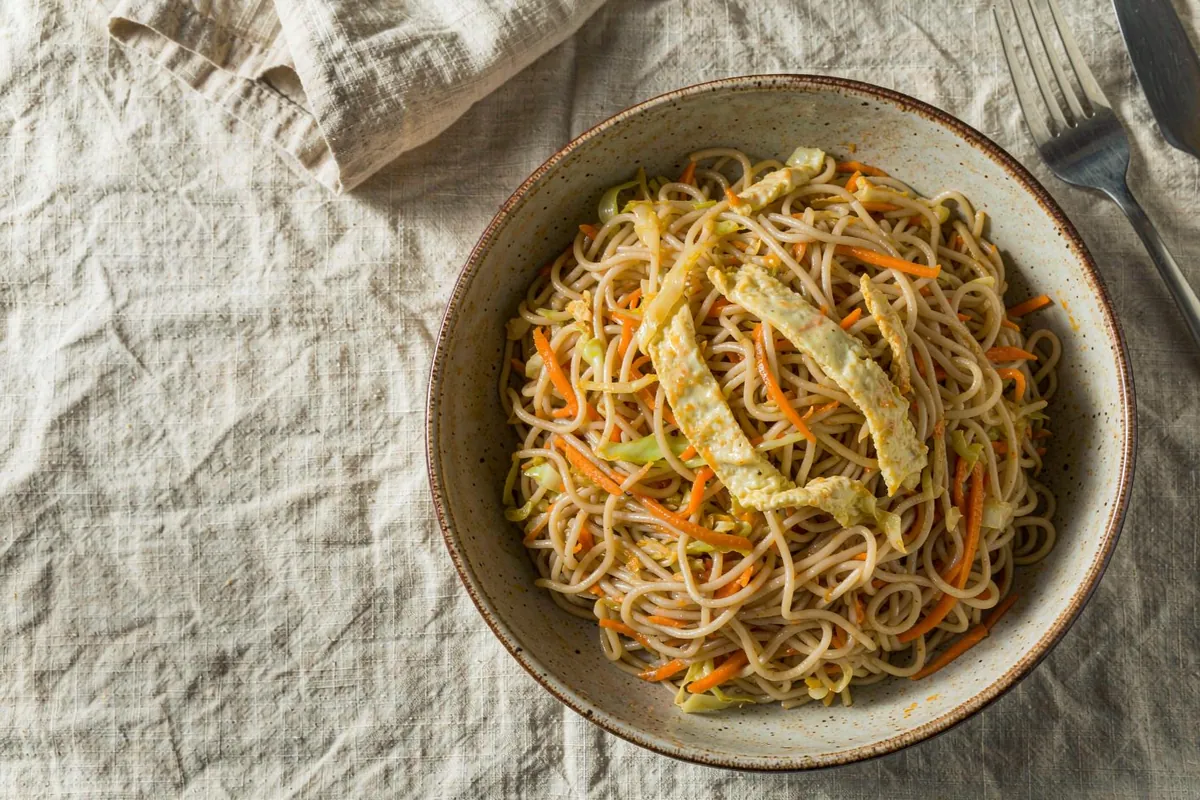
Tender noodles are gently simmered with sweet carrot and cabbage until everything softens, then folded with soft egg ribbons for a mild, easy bowl that suits small appetites.
About this dish
This is the quietest dish in the noodle chapter, built for evenings when nobody wants anything sharp or chewy. The vegetables are cut small and simmered long enough to collapse into sweetness, so the carrot loses its crunch and the cabbage turns silky. The egg is poured in last and dragged through the hot liquid, setting into flat, pale ribbons rather than firm curds. There is no chilli and no browning: just a soft hiss, the smell of warm soy, and a bowl that stays gentle to the last spoonful.
Before you start
Equipment: Skillet, Pot. Tap the ingredient checkboxes as you go.
Method
7 steps · tick each one off as you finish it.
Soften the aromatics
Warm 1 tbsp neutral oil in a wide skillet over medium heat for 60 seconds. Add 40 g scallion whites and stir for 1 minute, until they smell sweet and loosen but take on no colour at all.
Sweat the carrot
Add 160 g carrot matchsticks and 1/2 tsp salt, and stir for 2 minutes over medium-low heat. They have had enough when a strand bends without snapping and the edges look slightly translucent.
Add the cabbage and liquid
Tip in 180 g shredded cabbage and pour over 650 ml stock. Raise the heat to medium-high and bring it to a gentle simmer, about 3 minutes, until the cabbage slumps and the surface shows a slow, steady bubble.
Simmer the noodles
Nestle 180 g noodles into the liquid, pressing them down, and simmer uncovered for 5 minutes, stirring twice. They are ready once fully pliable and the broth has thickened enough to coat the back of a spoon.
Season
Stir in 1 tbsp soy sauce and taste; the liquid should be mildly savoury with the sweet carrot still coming through. If it reads flat, add a small pinch of salt rather than more soy, which would darken the dish.
Set the egg ribbons
Lower the heat to low so the surface barely trembles. Drizzle 110 g beaten egg in a thin, slow spiral and wait 40 seconds before stirring once; broad, pale ribbons should float up and the broth turn faintly cloudy.
Finish and rest
Turn off the heat and fold in 1 tsp sesame oil and the scallion greens. Let the pan stand for 2 minutes; the noodles are ready when they have absorbed most of the liquid and look glossy, not soupy.
Tips that matter
- Keep the heat low when the egg goes in; a hard boil breaks the ribbons into tough little flecks instead of broad sheets.
- Cut the carrot finely so it softens in the same time as the noodles; thick batons will stay crunchy and unbalance the soft texture.
Easy variations
- Fold in 80 g thawed peas with the cabbage for a pop of sweetness and a little colour.
- Swap the wheat noodles for 180 g rice noodles and reduce the simmer to 3 minutes for a lighter, gluten-free bowl.
Questions that come up
Why did my egg turn into rubbery bits?
The liquid was boiling when you added it. Drop the heat until the surface only trembles, pour the egg slowly, and give it 40 seconds undisturbed before the single stir.
The dish came out too watery. What went wrong?
It likely simmered covered, which traps steam. Keep the lid off so the broth reduces, and let the finished pan rest 2 minutes so the noodles drink the remaining liquid.
Nutrition, roughly
| Energy | 340 kcal |
|---|---|
| Protein | 14 g |
| Carbohydrate | 52 g |
| Fat | 9 g |
Estimated per serving from standard ingredients, rounded. Treat it as a guide, not clinical data.
Boiling Noodles and Pasta Well
Salt, water volume, the two-minute window and the starchy cooking liquid that most home cooks pour down the sink.