Pasta & Italian Rice · Italian home cooking
Spaghetti al Pomodoro
Ripe plum tomatoes, garlic and a short simmer make a bright sauce that clings to spaghetti, finished with torn basil and a little starchy pasta water for a silky coat.
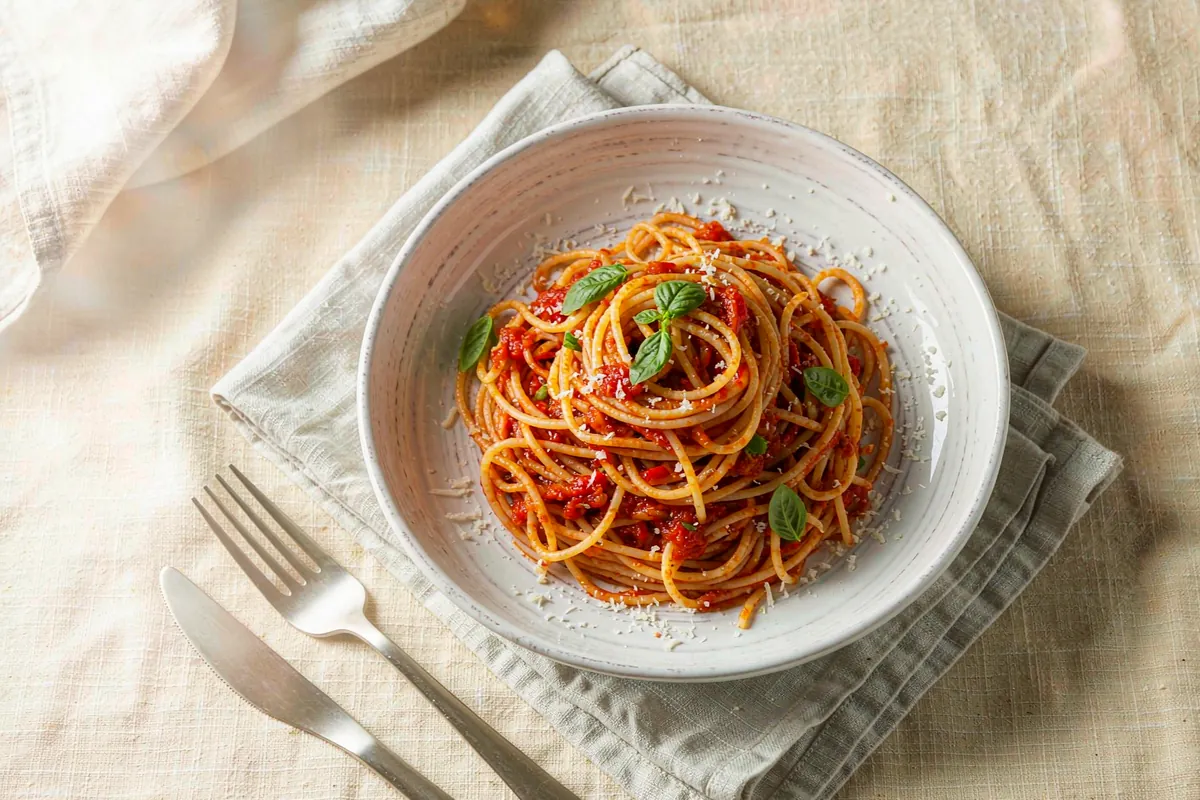
About this dish
A good pomodoro depends on patience with two humble things: tomatoes and garlic. Over a low flame, let the garlic soften without colour until a sweet, nutty smell rises. Add the tomatoes and listen for the gentle hiss as their water cooks off and the sauce thickens to a dense, jammy red. This is the point to stop: it coats a spoon in an even film. Toss the drained spaghetti straight into the pan so the strands drink up the sauce.
Before you start
Equipment: Pot, Skillet. Tap the ingredient checkboxes as you go.
Method
7 steps · tick each one off as you finish it.
Boil the water
Fill a large pot with 4 litres of water, add 1 tsp coarse salt and bring to a rolling boil over high heat, about 8 minutes. You are ready when big bubbles break the surface steadily and the water tastes noticeably salty.
Soften the garlic
Warm 3 tbsp olive oil in a wide skillet over low heat, add 15 g sliced garlic and cook 2 minutes, stirring. Look for this: the slices turn pale gold and a sweet, nutty smell rises; any browning means the heat was too high.
Simmer the tomatoes
Add 600 g chopped tomatoes and 1 tsp fine salt, raise the heat to medium and simmer uncovered for 15 minutes, stirring occasionally. The sauce is done when it darkens to dense brick red and a spoon drawn through leaves a clear trail.
Cook the spaghetti
Drop 400 g spaghetti into the boiling water and cook 1 minute short of the packet time, about 9 minutes, at a lively boil. The cue is simple: a strand bends easily but still shows a thin white pin of uncooked core when bitten.
Reserve the water
Before draining, scoop out 60 ml of the cloudy cooking water into a cup; it should look slightly milky and feel a little slippery between your fingers. This starch is what will later bind the sauce to the pasta instead of leaving it watery.
Marry sauce and pasta
Tip the drained spaghetti into the skillet of sauce over low heat, add 30 ml of the reserved water and toss with tongs for 60 seconds. It is right when every strand gleams red and the sauce clings rather than pooling on the pan bottom.
Finish and serve
Turn off the heat, tear in 10 g basil, scatter 30 g grated cheese and toss once more for 20 seconds until the leaves just wilt. Serve in warm shallow bowls while the sauce still flows slowly and the surface catches the light.
Tips that matter
- Salt the pasta water until it tastes mildly of the sea; the noodles absorb that seasoning from the inside, so the finished sauce needs far less salt.
- If fresh tomatoes are pale and out of season, add 1 tsp tomato paste with the garlic and cook it for 30 seconds to recover a deeper red and a sweeter backbone.
Easy variations
- Stir 1/2 tsp chilli flakes into the oil with the garlic for a gently hot arrabbiata-style plate.
- Fold 100 g torn mozzarella into the pan off the heat so it softens into strings without melting into the sauce.
Questions that come up
Why is my tomato sauce watery instead of clinging to the spaghetti?
It needed a longer uncovered simmer or the pasta went in too wet. Cook the sauce until a spoon leaves a clear trail, drain the noodles well, and finish everything together in the pan for 60 seconds.
Can I use tinned tomatoes instead of fresh?
Yes. Use 600 g crushed tinned plum tomatoes and skip peeling; the simmer may take 3 or 4 minutes longer, and a pinch of sugar helps if the tin tastes sharply acidic.
Nutrition, roughly
| Energy | 480 kcal |
|---|---|
| Protein | 16 g |
| Carbohydrate | 74 g |
| Fat | 12 g |
Estimated per serving from standard ingredients, rounded. Treat it as a guide, not clinical data.
Boiling Noodles and Pasta Well
Salt, water volume, the two-minute window and the starchy cooking liquid that most home cooks pour down the sink.