Rice & Fried Rice · Chinese home cooking
Perfect Steamed White Rice
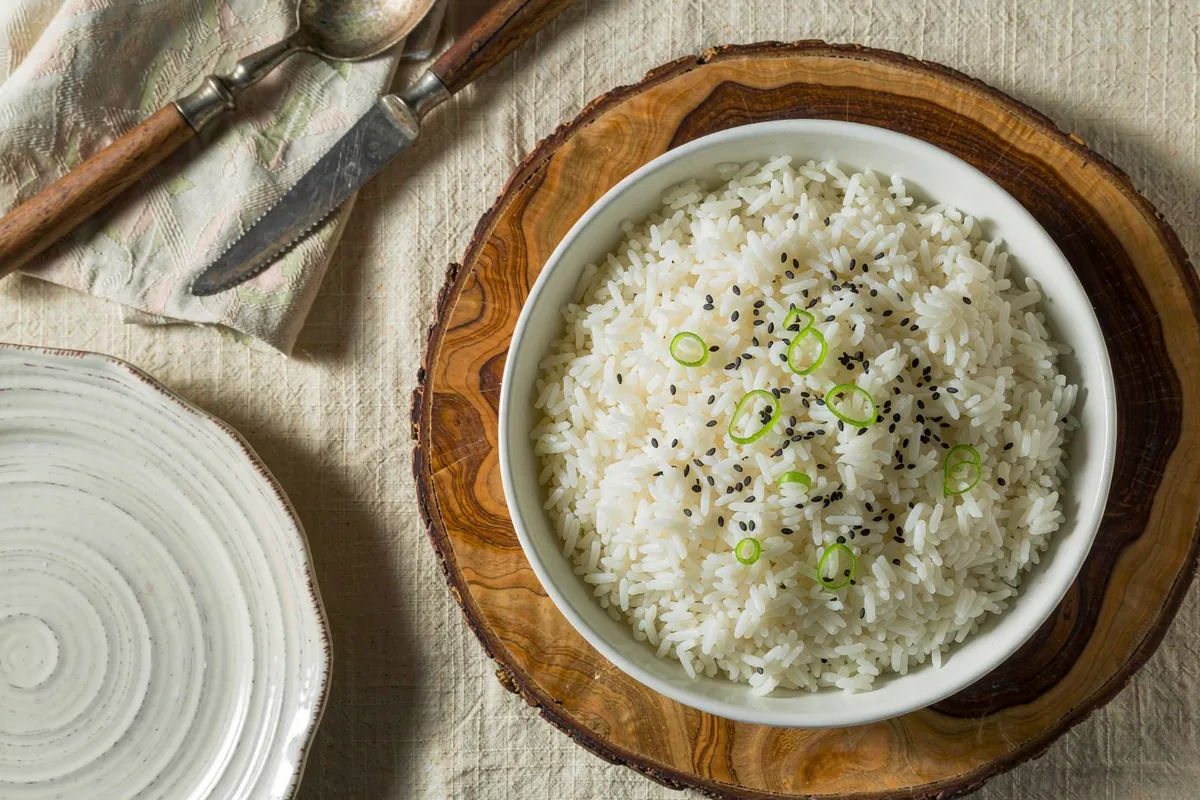
Rinsed jasmine rice, a measured 1:1.2 water ratio and a ten-minute rest give separate, faintly sweet grains with a dry, fluffy top and no stuck crust.
About this dish
Rice asks for very little, yet it punishes guesswork. Rinse until the water runs clear and the grains squeak against your fingers; that starchy cloud is what glues a pot into one slab. The ratio matters more than the brand, and so does leaving the lid alone. You will hear the cooker click from a wet simmer to a dry hiss. Ten minutes off the heat lets moisture settle downward, so the top turns as tender as the bottom. Lift the lid: a clean, grassy smell rises first.
Before you start
Equipment: Rice cooker. Tap the ingredient checkboxes as you go.
Method
6 steps · tick each one off as you finish it.
Rinse the starch
Tip the rice into a fine sieve and swirl it under cold water for 60 seconds, rubbing gently. The water starts milky and turns almost clear; stop when you can see the grains through it. Shake the sieve hard for 10 seconds to drain.
Measure the water
Put the drained rice in the cooker bowl, add 360 ml cold water and the salt, then level the surface. The water should sit about 1 cm above the rice; dip a fingertip in and it reaches the first crease.
Start the cycle
Close the lid and press the standard white-rice setting. Leave it completely alone for 18 to 20 minutes; opening the lid drops the temperature and leaves the upper grains hard. You will hear a low burble first, then a thinner hiss as free water disappears.
Rest off the heat
When the cooker switches to keep-warm, turn it off and wait 10 minutes. Do not lift the lid. Trapped steam moves from the wet bottom into the drier top, and the grains firm up enough to lift in clean sheets instead of tearing.
Fluff, do not stir
Open the lid and let the first cloud of steam escape for 20 seconds. Slide a paddle down the side, lift from the bottom and turn sections over gently. Stop after 6 folds; vigorous stirring breaks the grains and turns them gluey.
Serve or hold
Spoon into warm bowls while the surface still looks dry and slightly separated, with no pooled water at the rim. If holding, drape a clean towel under the lid for up to 20 minutes. Scatter sesame seeds and scallions only at the table.
Tips that matter
- On a hob, bring the pot to a boil uncovered, cover tightly, drop to the lowest flame for 12 minutes, then rest 10 minutes off the heat.
- Brown rice needs roughly 480 ml water and a 40-minute cycle for the same 300 g, with the same ten-minute unopened rest.
Easy variations
- Swap 60 g of the white rice for rinsed short-grain glutinous rice if you want grains that cling together for shaping.
- Add a 5 cm strip of kombu or one lightly crushed garlic clove to the water, then lift it out before fluffing.
Questions that come up
Why is my top layer hard while the bottom is wet?
The lid was lifted mid-cycle or the rest was skipped. Keep it closed for the full 18 to 20 minutes, then give the pot 10 minutes off the heat so the steam can even out.
Can I cook a smaller batch in a rice cooker?
Yes, though most machines need at least 150 g dry rice to sense correctly. Below that, use a small saucepan with a tight lid and keep the same 1:1.2 ratio by weight.
Nutrition, roughly
| Energy | 270 kcal |
|---|---|
| Protein | 6 g |
| Carbohydrate | 61 g |
| Fat | 1 g |
Estimated per serving from standard ingredients, rounded. Treat it as a guide, not clinical data.
Rice, Water and Heat: A Ratio Field Guide
Why one cup of rice does not always want one cup of water, and how to tell a cooked pot from a steamed one before you lift the lid.