Congee, Porridge & Oats · Chinese home cooking
Tong Ho Flour Porridge
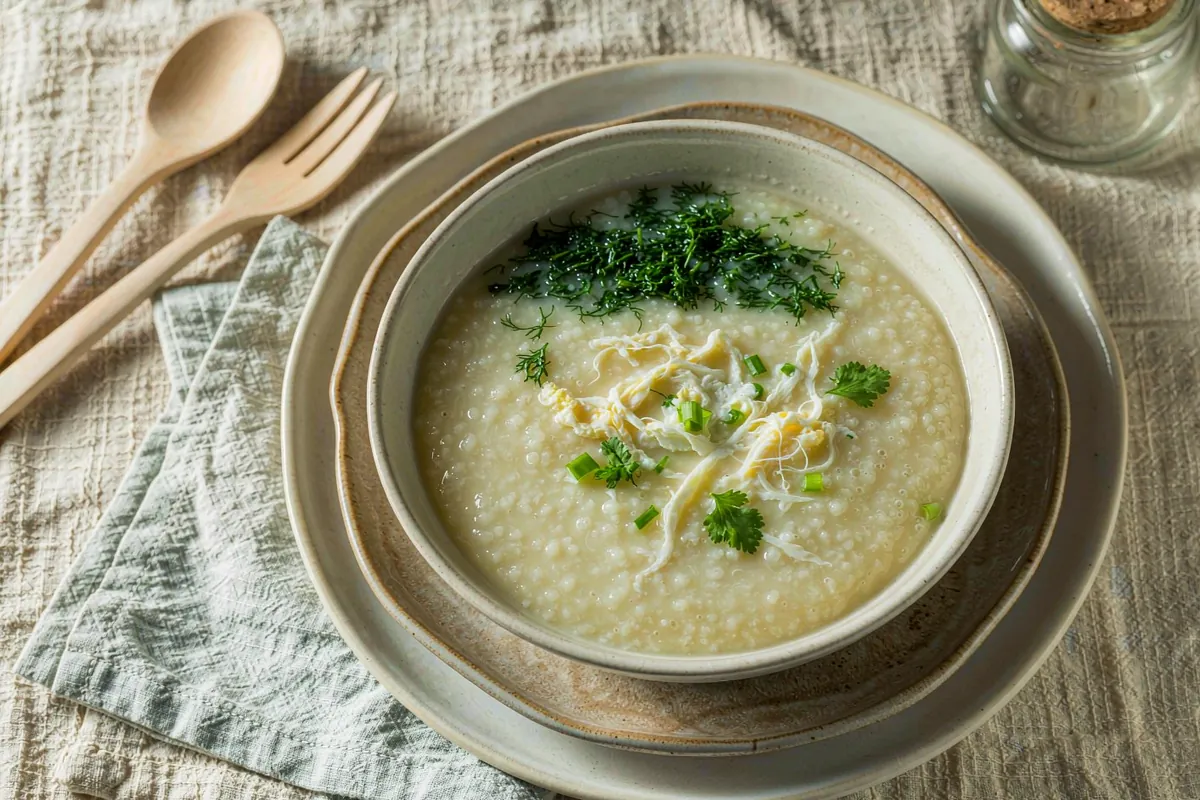
A smooth wheat-flour slurry thickens a light broth into a silky porridge, then chopped crown daisy and egg ribbons are stirred in for a gentle, grassy supper that comes together in one pot.
About this dish
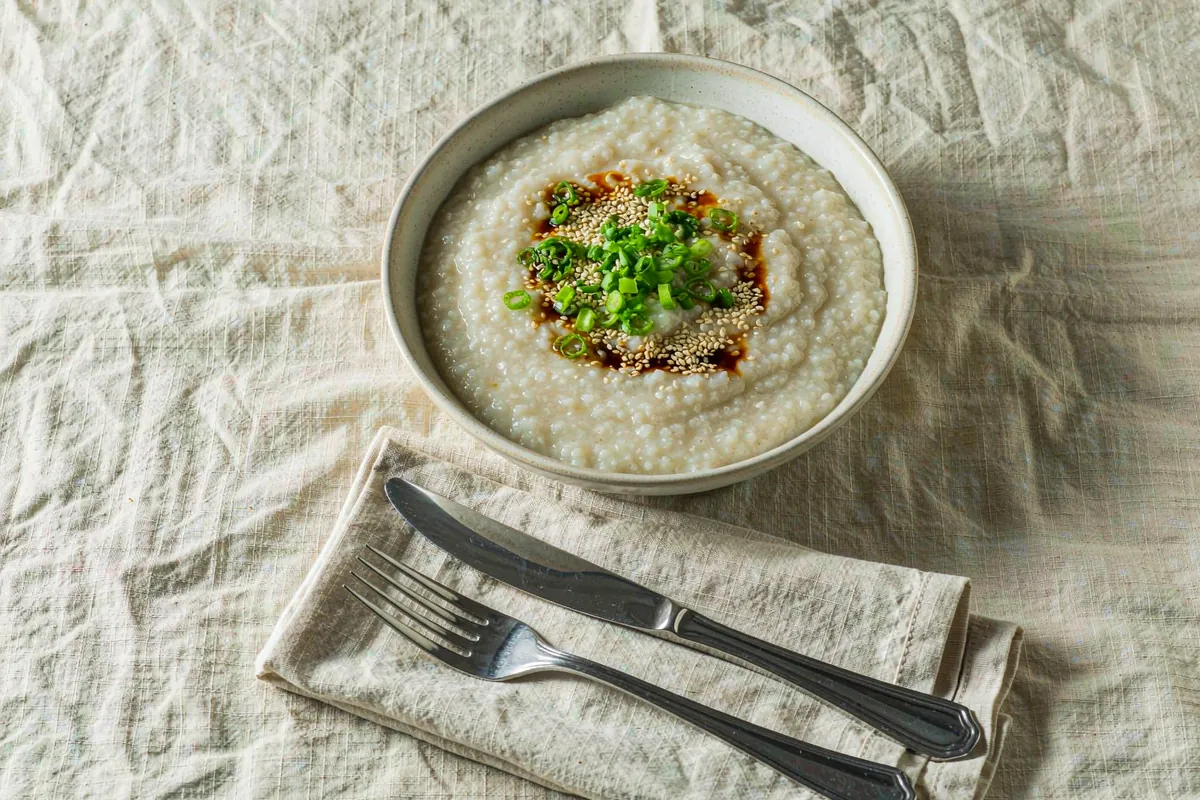
Cold evenings and a near-empty cupboard produce this bowl. The slurry hits hot stock with a soft hiss and thickens at once, turning thin liquid glossy and opaque. Crown daisy, sold as tong ho, carries a faint chrysanthemum smell that blooms as it wilts; the leaves darken from bright to deep green in under a minute. Egg poured in a slow thread sets into pale floating ribbons. The porridge should coat a spoon lightly and steam with a nutty sesame note, never stand as stiff paste.
Before you start
Equipment: Pot. Tap the ingredient checkboxes as you go.
Method
7 steps · tick each one off as you finish it.
Mix the slurry
Off the heat, whisk 120 g flour, 1/2 tsp salt and 300 ml cold water for 60 seconds, until pale, lump-free and as thin as cream. Rest it 10 minutes, then re-whisk; the surface should look glossy and completely smooth.
Scent the oil
Set a heavy pot over medium heat and add 2 tbsp oil with 20 g sliced garlic. Stir for about 90 seconds, until the garlic turns light gold and the kitchen smells nutty, not sharp; do not let it brown.
Bring the stock to a simmer
Pour in 900 ml stock, raise the heat to medium-high and bring it to a gentle simmer in about 4 minutes. You are ready when small bubbles ring the edge steadily and a faint wisp of steam rises, not a rolling boil.
Thicken the broth
Lower the heat to medium-low. Re-whisk the rested slurry, then pour it into the simmering stock in a thin, steady stream while stirring constantly with a wooden spoon for 3 minutes, until the broth turns glossy, opaque and thick enough to coat the spoon.
Wilt the greens
Add 150 g chopped crown daisy and stir over medium-low heat for 90 seconds. Ready once every leaf has collapsed to a deep, even green and the herbal, chrysanthemum-like scent lifts from the pot; the porridge should still flow freely.
Ribbon in the egg
Keep the heat at the barest simmer. Drizzle 110 g beaten egg in a slow spiral across the surface, wait 20 seconds without stirring, then fold once for about 60 seconds, until pale, silky ribbons set and float rather than sink.
Season and serve
Take the pot off the heat. Stir in 1 tbsp soy sauce, 2 tsp sesame oil, 1/4 tsp white pepper and the sliced scallions, then rest 2 minutes. Serve when the surface is lightly thickened and the steam carries a toasted, nutty aroma.
Tips that matter
- Whisk the slurry with cold water, never warm; warm water hydrates the flour early and leaves stubborn lumps that no amount of stirring will smooth out.
- If the porridge tightens as it sits, loosen it with a 60 ml splash of hot stock over low heat, stirring until it flows again.
Easy variations
- Swap crown daisy for 150 g chopped spinach or watercress and add a 5 g knob of grated ginger with the garlic.
- For a heartier bowl, stir in 100 g small cooked shrimp or diced soft tofu during the last 2 minutes of simmering.
Questions that come up
Why did my flour porridge turn lumpy?
The slurry went in too fast or the stock was boiling hard. Pour it in a thin stream over medium-low heat while stirring constantly, and re-whisk the slurry just before pouring.
Can I make this ahead?
It is best fresh, since the flour keeps thickening. Reheat gently with an extra 80 ml stock per portion over low heat, stirring, until glossy and pourable again.
Nutrition, roughly
| Energy | 280 kcal |
|---|---|
| Protein | 11 g |
| Carbohydrate | 38 g |
| Fat | 9 g |
Estimated per serving from standard ingredients, rounded. Treat it as a guide, not clinical data.
A Staple Cupboard That Earns Its Space
A short list of grains, flours and dried noodles, how long they actually keep, and what each one can become once it reaches the pan.