Noodles East · Chinese home cooking
Zhajiang Noodles with Soybean Paste
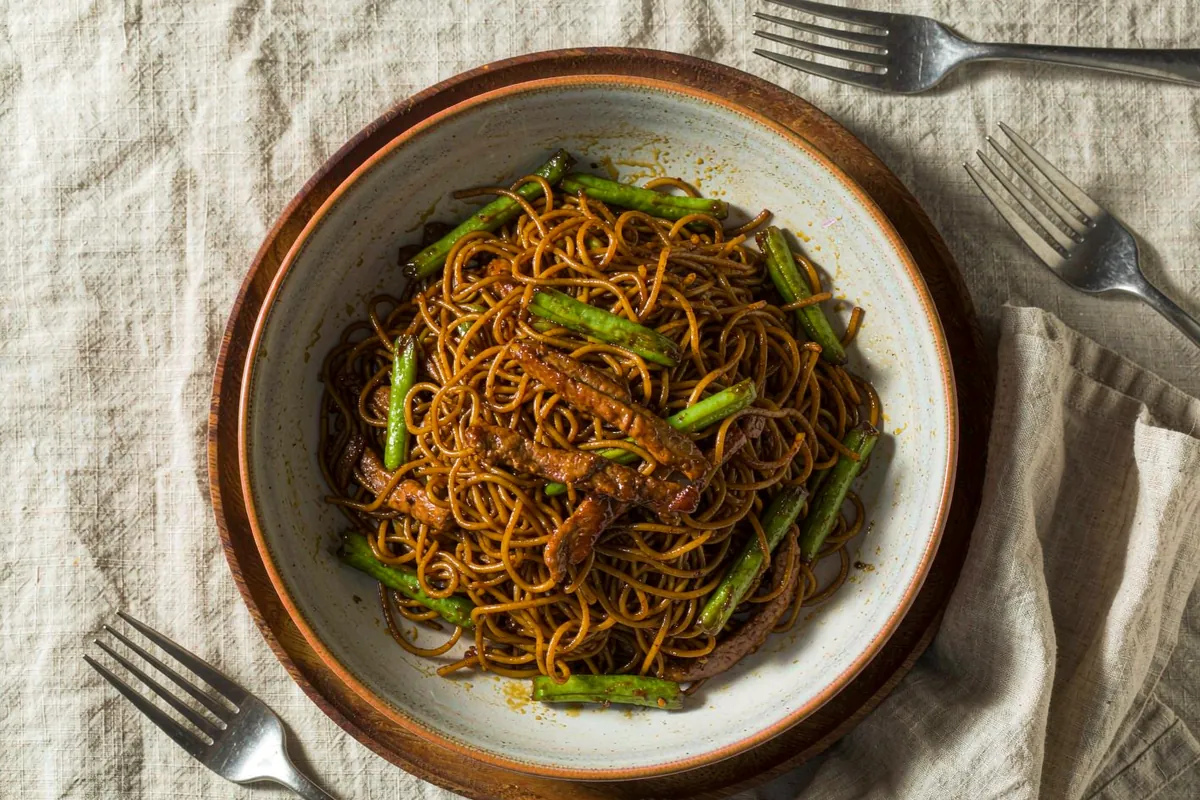
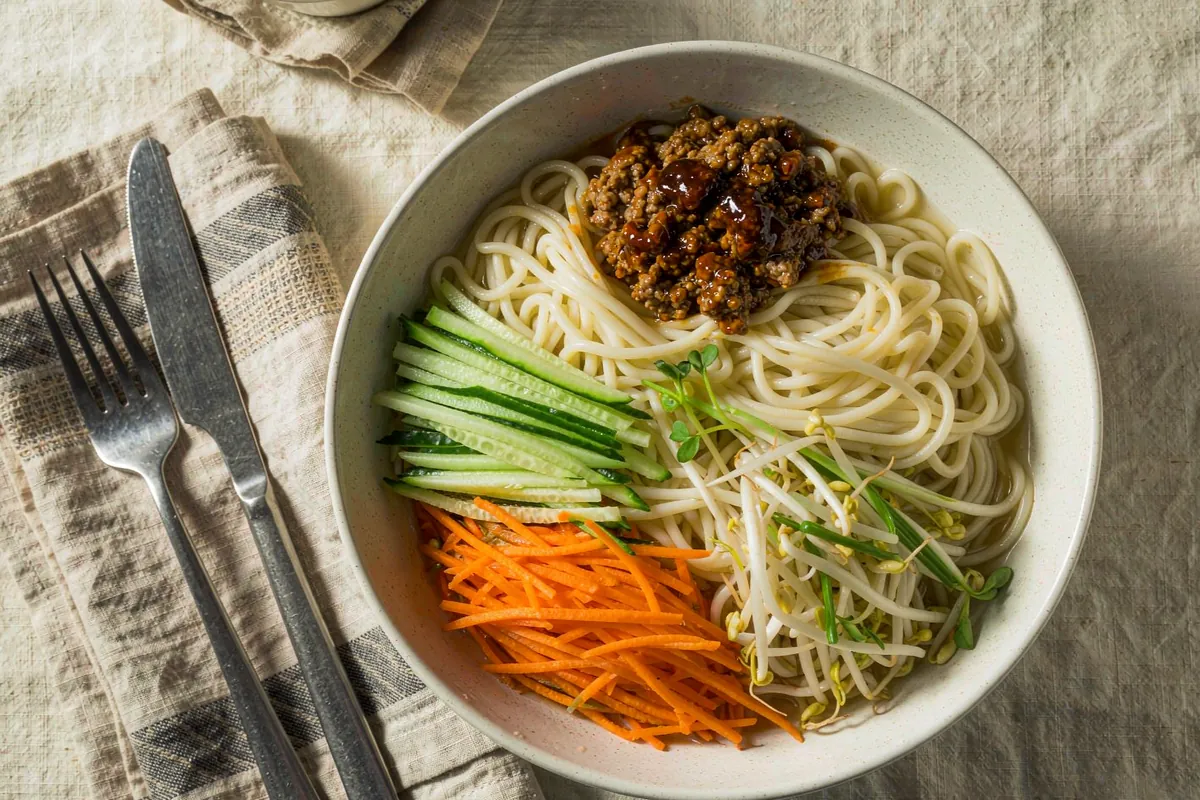
Thick wheat noodles under a dark, glossy sauce of minced pork and fermented soybean paste fried slowly until the oil separates, with cool crisp vegetable strips on top.
About this dish
Zhajiang is a sauce that must be fried, not simply simmered. Soybean paste tastes raw and harsh until it meets hot fat; twenty slow minutes turns it dark, mellow and faintly sweet, and a clear ring of oil separates at the edge of the wok. That ring is the sign it is done. Stir often, because the paste catches within seconds once the water has gone. Serve it over hot noodles with cold, crunchy vegetables on top. The contrast is the dish: soft, salty and dark against crisp and bright.
Before you start
Equipment: Wok, Pot. Tap the ingredient checkboxes as you go.
Method
8 steps · tick each one off as you finish it.
Dilute the paste
Spoon the soybean paste into a bowl and stir in 100 ml water until it loosens to a pourable, lump-free slurry. This stops it seizing and burning in the hot wok, and lets it coat the pork evenly instead of clumping.
Brown the pork
Heat 3 tbsp oil in a wok over medium-high heat for 90 seconds. Add the pork and press it flat for 2 minutes without stirring, then break it up and cook 4 minutes more until no pink remains and the edges are lightly crisp.
Soften the aromatics
Push the pork to one side, add the onion to the cleared space and cook 3 minutes until translucent and soft at the edges. Stir in the garlic and ginger for 40 seconds; the wok should smell sharp and sweet, with no burnt garlic notes.
Fry the paste
Pour in the loosened paste and the Shaoxing wine, drop the heat to medium-low and fry 12 minutes, stirring every 90 seconds. The mixture will darken from brick red to deep brown and the raw, salty edge will soften into something rounder.
Simmer until the oil splits
Add the remaining 150 ml water, soy sauce and sugar, stir, and simmer uncovered on low for 8 minutes. You are waiting for a clear amber ring of oil to separate around the edge of the wok; until then the sauce still tastes harsh.
Thicken and finish
Stir the cornstarch slurry once, then trickle it in while stirring for 60 seconds until the sauce turns glossy and clings to the pork. Turn off the heat and add the sesame oil. It should mound softly on a spoon, not run off.
Cook the noodles and veg
Boil the noodles in 2 litres unsalted water for 4 minutes if fresh, 7 if dried, until springy with no white core. Drain, but keep 100 ml of the hot water. Blanch the bean sprouts in it for 30 seconds, then drain again.
Build the bowls
Divide the hot noodles among four bowls, ladle a generous spoonful of sauce over each and arrange the cucumber, carrot, sprouts and scallions in separate piles on top. Toss at the table so the cool vegetables keep their crunch against the dark sauce.
Tips that matter
- Different jars of soybean paste vary wildly in salt. Hold back 1 tbsp of the soy sauce, taste after the oil separates, then adjust.
- Keep the vegetables cold and dry. Warm or wet strips soften within a minute of landing on hot noodles and lose the contrast that makes the dish work.
Easy variations
- Replace the pork with 250 g finely diced firm tofu or shiitakes, browned hard in the oil first, for a vegetarian sauce.
- Add 1 tsp chilli crisp to the paste as it fries for a warmer, spicier version without changing the cooking time.
Questions that come up
Why does my sauce taste harsh and raw?
It did not fry long enough. Keep it on medium-low for the full 12 minutes before adding water, and wait for the clear ring of oil at the edge of the wok.
Can I make the sauce ahead?
Yes, it keeps five days in the fridge and tastes better on day two. Reheat with 2 tbsp water over low heat, stirring until glossy again.
Nutrition, roughly
| Energy | 640 kcal |
|---|---|
| Protein | 28 g |
| Carbohydrate | 82 g |
| Fat | 22 g |
Estimated per serving from standard ingredients, rounded. Treat it as a guide, not clinical data.
Boiling Noodles and Pasta Well
Salt, water volume, the two-minute window and the starchy cooking liquid that most home cooks pour down the sink.