Technique note · Foundation · 8 min read
Flour, Water and Rest: Working with Wheat Dough
The three states of a simple dough, how hydration changes them, and why resting time is an ingredient rather than a pause.
Technique note · Foundation · 8 min read
The three states of a simple dough, how hydration changes them, and why resting time is an ingredient rather than a pause.
Plain wheat flour and water make one dough, not many. A stiff dough at about 50 percent water holds a pleat and keeps its shape in a steamer: this is the dough for dumpling wrappers and firm noodles. At 60 to 65 percent it becomes soft, tacky and easy to roll, which is what you want for mantou, flower rolls and most flatbreads. The number is simply water weight divided by flour weight.
Flour also varies. A humid kitchen, a different brand, or wholemeal flour can shift the amount of water you need by 20 ml in a 500 g batch. Add the last quarter of the water gradually, and judge by feel: the dough should come together into a shaggy ball that leaves the bowl clean but still clings slightly to a fingertip.
Kneading aligns gluten and distributes water; it does not create either. Five to eight minutes of firm folding is enough for a bun dough. You are looking for a smooth surface that springs back slowly when pressed, and a piece that stretches a little before tearing. If it tears instantly and looks dry, rest it covered for ten minutes and come back rather than adding more flour, which only makes the finished bun dense.
Plain lean dough keeps overnight in the fridge, where it firms up and becomes easier to shape. Let it sit at room temperature for thirty minutes before rolling. Shaped uncooked dumplings freeze well on a tray; once solid, bag them and cook from frozen with two extra minutes in the pan or steamer. Doughs containing yeast are less forgiving of long cold storage, so follow the specific recipe rather than this general rule.
A sudden temperature drop shocks a barely set structure. Turn off the heat, crack the lid open and wait three to five minutes before lifting it fully. Over-proofed dough collapses the same way, so shape sooner next time.
You can, but the higher protein makes a chewier bun. Plain or all-purpose flour gives the soft, fine crumb most home kitchens expect; add one tablespoon of cornflour per 250 g if you want it even tenderer.
Put it into practice
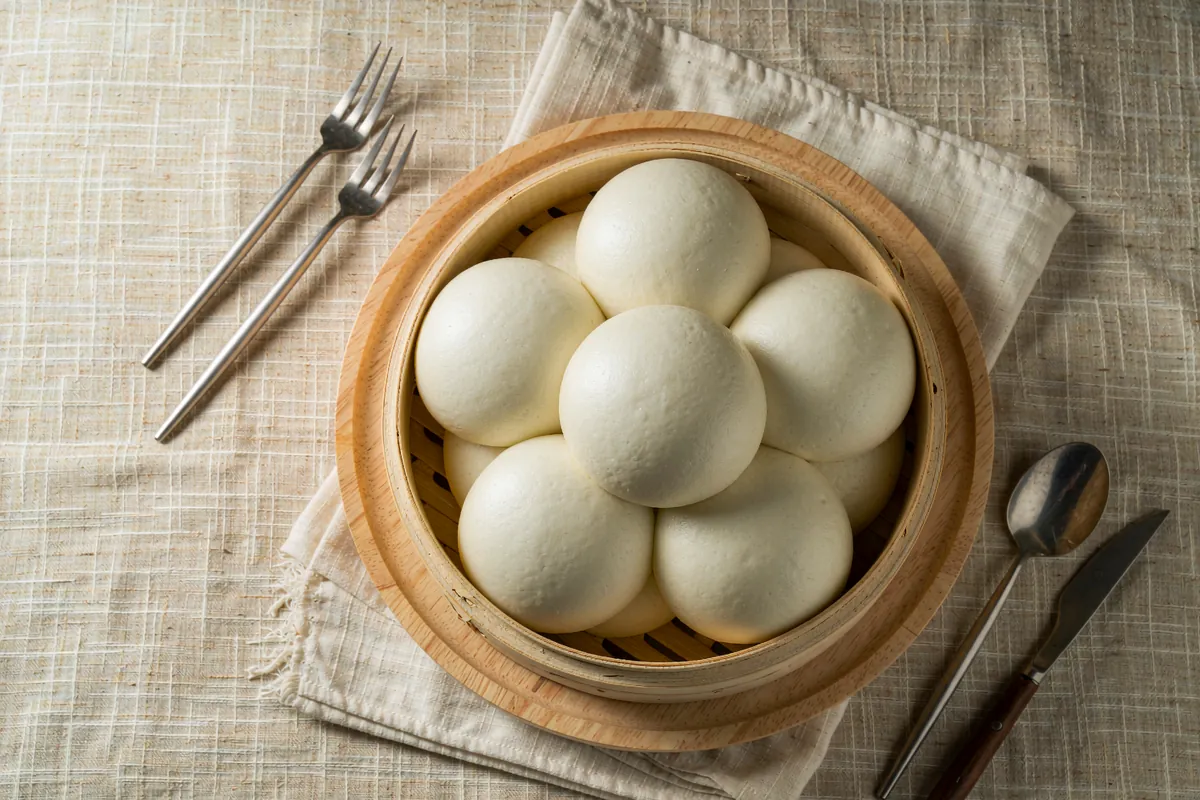
Plain wheat dough, proofed twice and steamed over gentle heat, yields tall snowy buns with a tight, springy crumb that pulls apart into soft, faintly sweet layers.
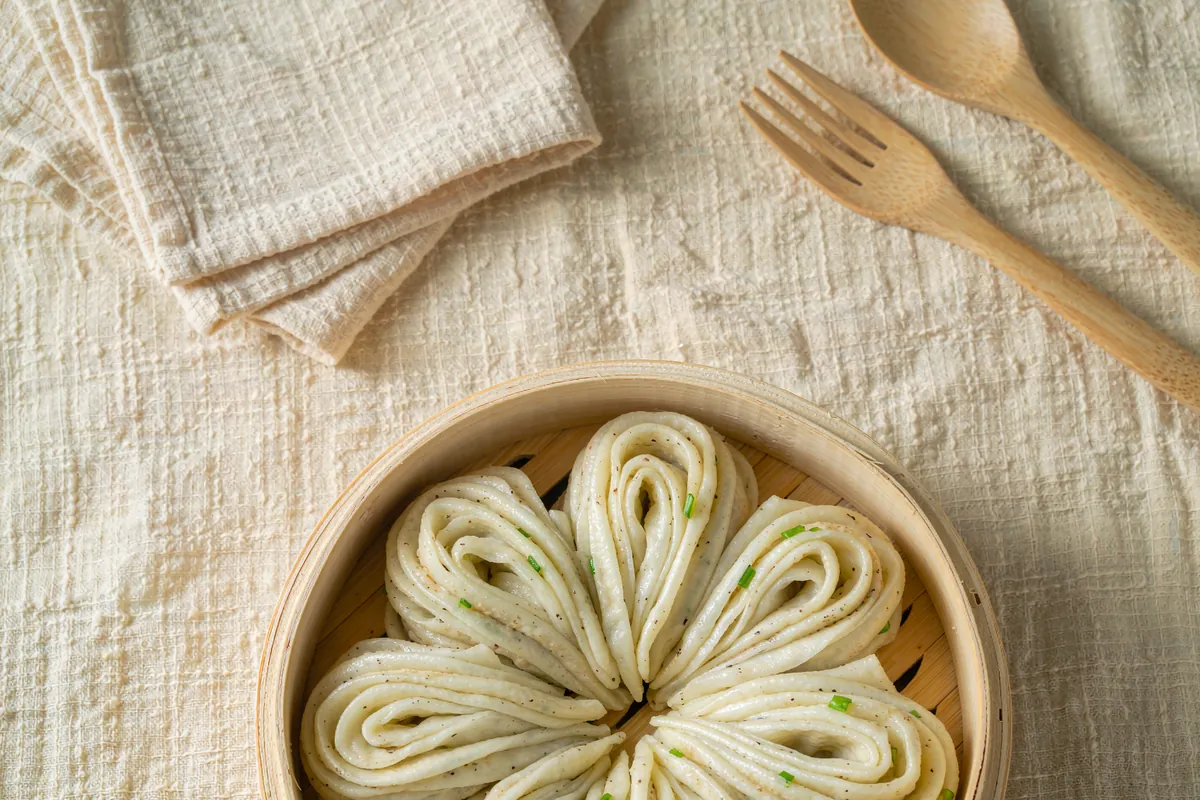
Yeast dough is brushed with scallion oil, folded into a thin ribbon and twisted into layered rosettes that steam into soft, pull-apart spirals with green flecks in every seam.
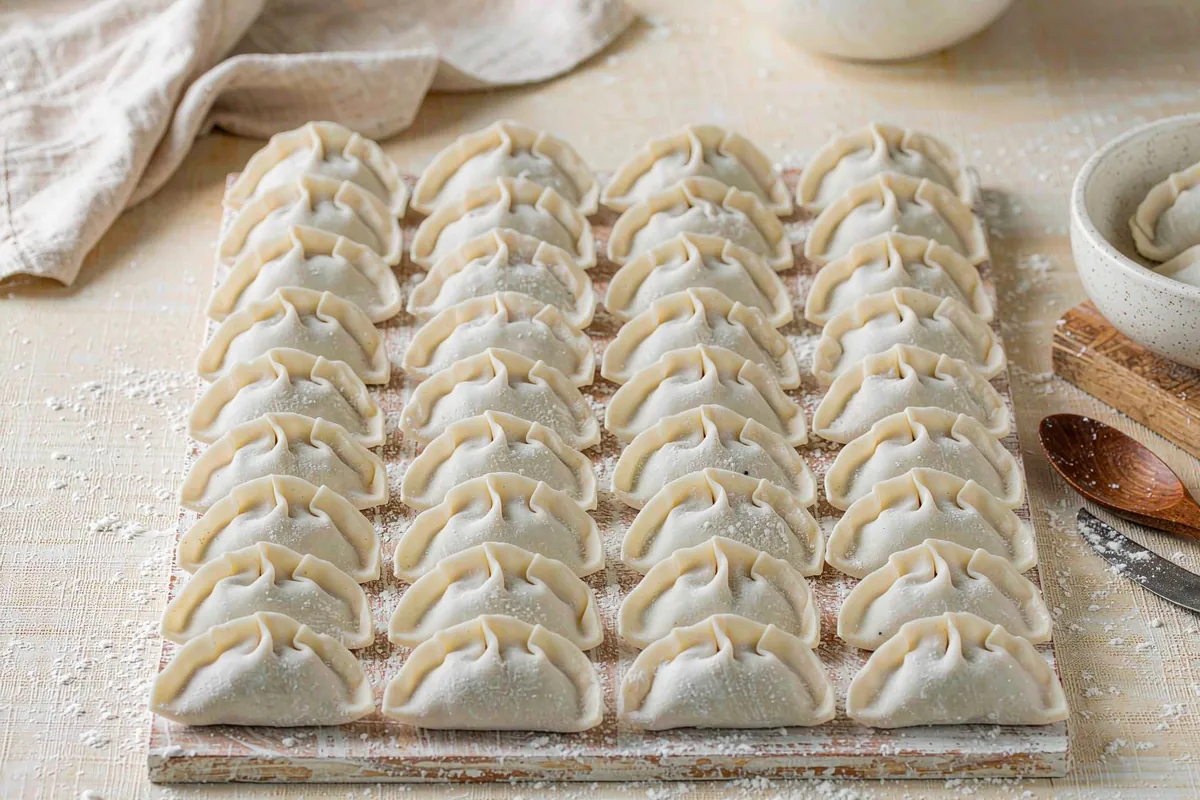
Hand-rolled wheat wrappers hold a salted pork and cabbage filling that releases its own juices; a rolling boil sets the skins while the centres stay firm and faintly peppery.
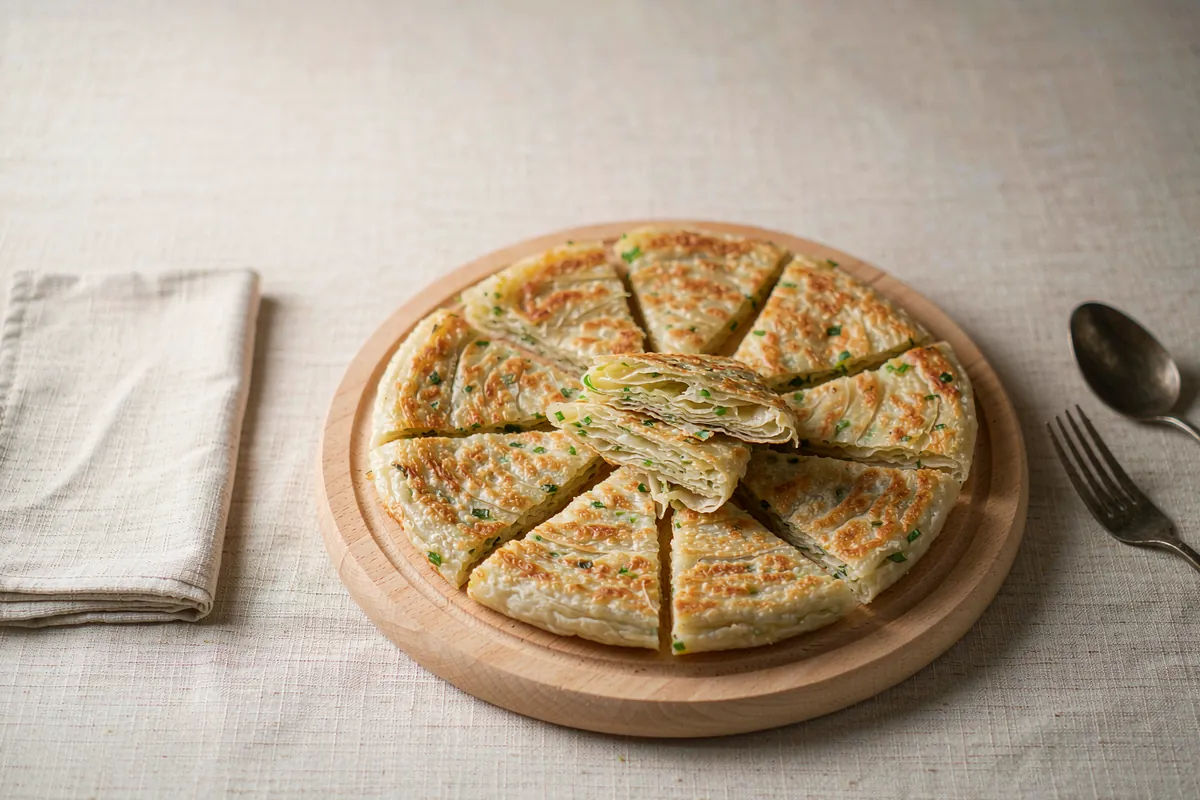
Hot water dough, a rolled coil of scallions and a shallow fry give a pancake that shatters into flaky layers while staying chewy at its centre.