Potatoes & Other Staples · American home cooking
Creamy Cauliflower and Potato Mash
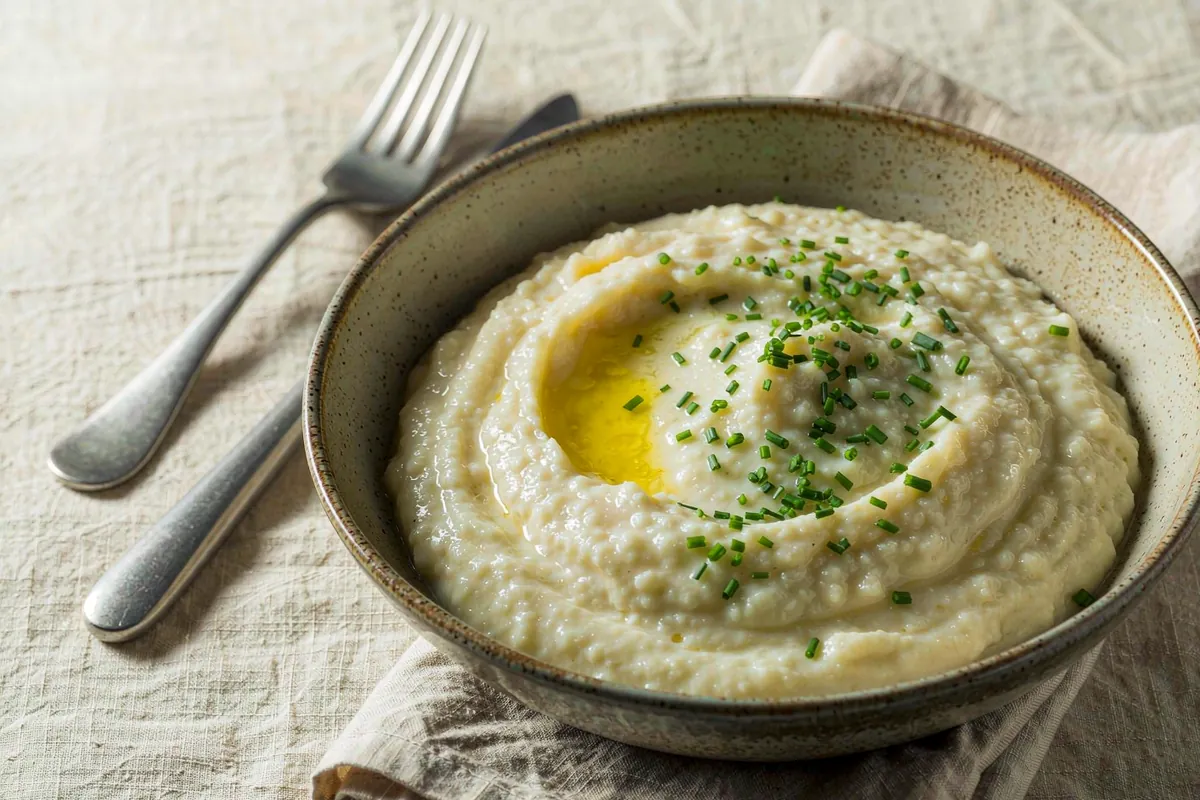
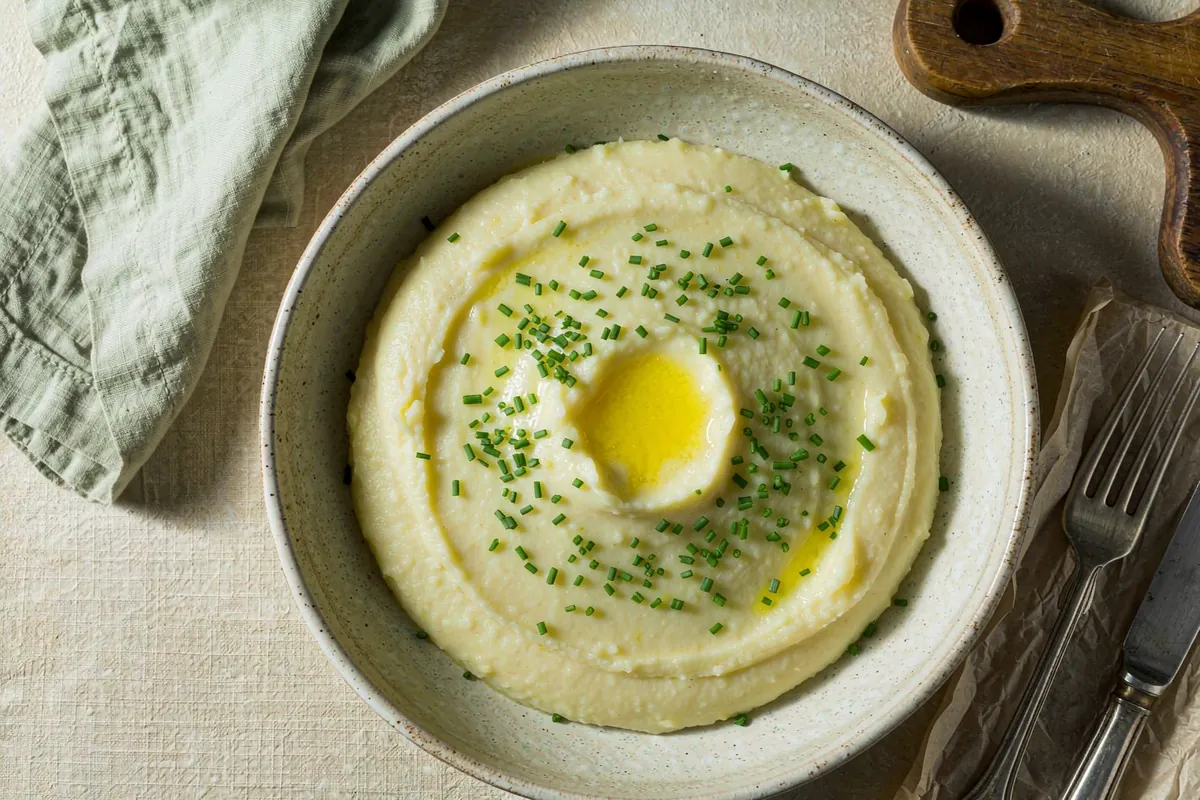
Cauliflower and floury potato are boiled together, drained hard and mashed with warm milk and butter into a light, smooth puree that holds soft peaks without turning gluey.
About this dish
Boiling the cauliflower with the potato is a shortcut that makes the mash lighter: the florets break down to nothing and loosen the starch rather than adding more of it. The important moment comes after draining, when the pot goes back on a low flame for a minute and the last steam leaves with a nutty smell of cooked cabbage. Warm milk and butter go in off the heat, or the puree turns gluey. Done right, it should slump off a spoon and hold the trail of a fork.
Before you start
Equipment: Pot. Tap the ingredient checkboxes as you go.
Method
6 steps · tick each one off as you finish it.
Start the boil
Put 400 g potato chunks and 1 tsp salt in a pot with 1500 ml cold water and boil over high heat for 8 minutes. Wait until bubbles break across the surface and a knife meets slight resistance in a chunk.
Add the cauliflower
Tip in 400 g cauliflower florets, lower the heat to medium and simmer for 10 minutes, uncovered. The moment to move on is when a floret crushes against the side of the pot with no effort and the potato chunks split at their edges when prodded.
Drain and dry
Drain everything in a colander, then return to the pot over low heat for 1 minute, shaking gently. Ready once the chunks look floury and matte rather than wet, and the steam rising off them has stopped smelling of starchy water.
Warm the milk
While the pot dries, warm 120 ml milk with 60 g butter in a pan over low heat for 2 minutes, then take it off the heat. Move on when the butter has melted, the surface steams and no skin has formed.
Mash
Take the pot off the heat and mash the vegetables with a masher for 2 minutes, then beat in the warm milk mixture with a wooden spoon. It has had enough when the puree is smooth, holds soft peaks and falls slowly from the spoon.
Season and serve
Beat in 1/2 tsp white pepper and 1/4 tsp nutmeg over low heat for 30 seconds, then spoon into a warm bowl. Scatter 20 g chives and 1 tsp flaky salt over the top; serve within 5 minutes, while the surface shows soft, buttery swirls.
Tips that matter
- Never blend this mash; the blades rupture the potato starch and turn the puree into a sticky paste within seconds.
- Add the milk warm and off the heat. Cold liquid tightens the starch, and beating over a live flame makes the bottom catch and taste scorched.
Easy variations
- Stir 50 g finely grated parmesan and 1 tsp lemon zest into the finished mash for a sharper, savoury version.
- Replace 120 ml milk with 120 ml single cream and add 1 tsp chopped thyme for a richer, herb-scented side dish.
Questions that come up
Why is my mash gluey?
Either it was blended or beaten too long over heat. Use a hand masher, stop as soon as the puree is smooth, and always add the milk off the heat.
Can I make it ahead and reheat?
Yes. Cool, cover and chill for up to 2 days; reheat gently with 60 ml extra milk over low heat for 5 minutes, stirring, until it loosens back to soft peaks.
Nutrition, roughly
| Energy | 265 kcal |
|---|---|
| Protein | 6 g |
| Carbohydrate | 30 g |
| Fat | 14 g |
Estimated per serving from standard ingredients, rounded. Treat it as a guide, not clinical data.
A Staple Cupboard That Earns Its Space
A short list of grains, flours and dried noodles, how long they actually keep, and what each one can become once it reaches the pan.