Potatoes & Other Staples · American home cooking
Creamy Mashed Potatoes
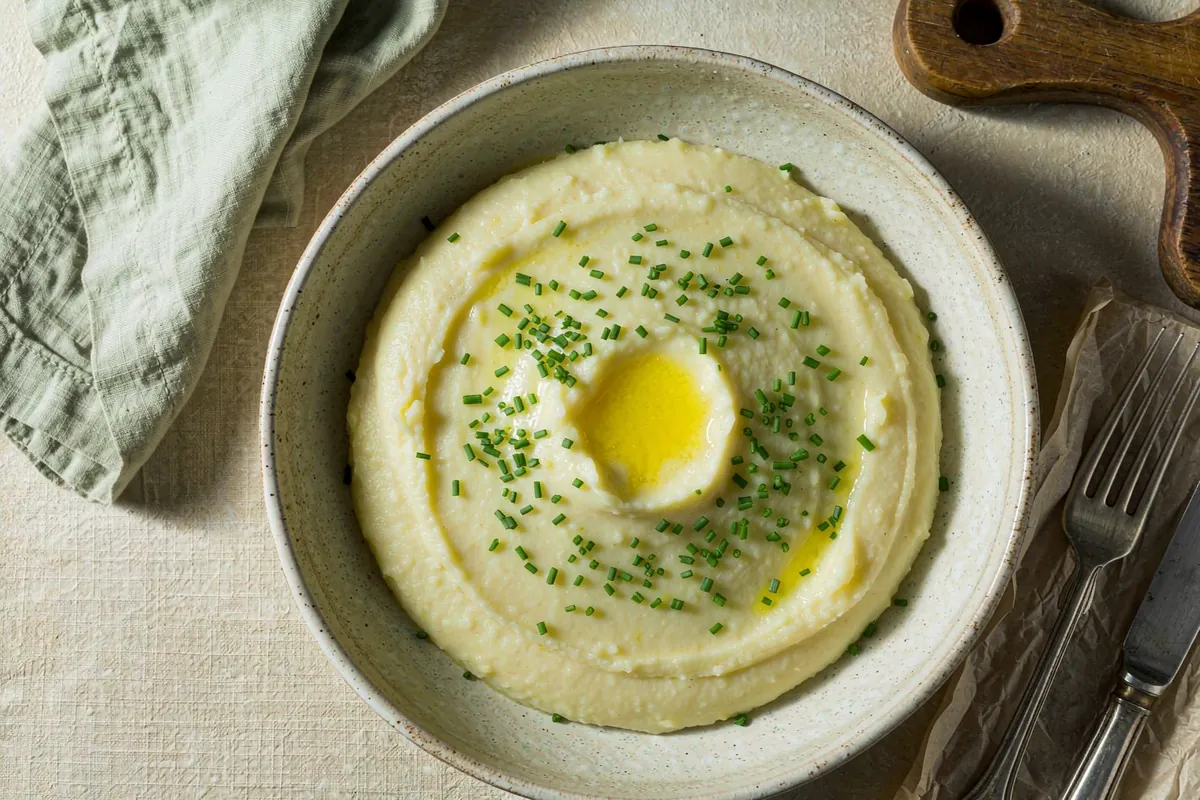
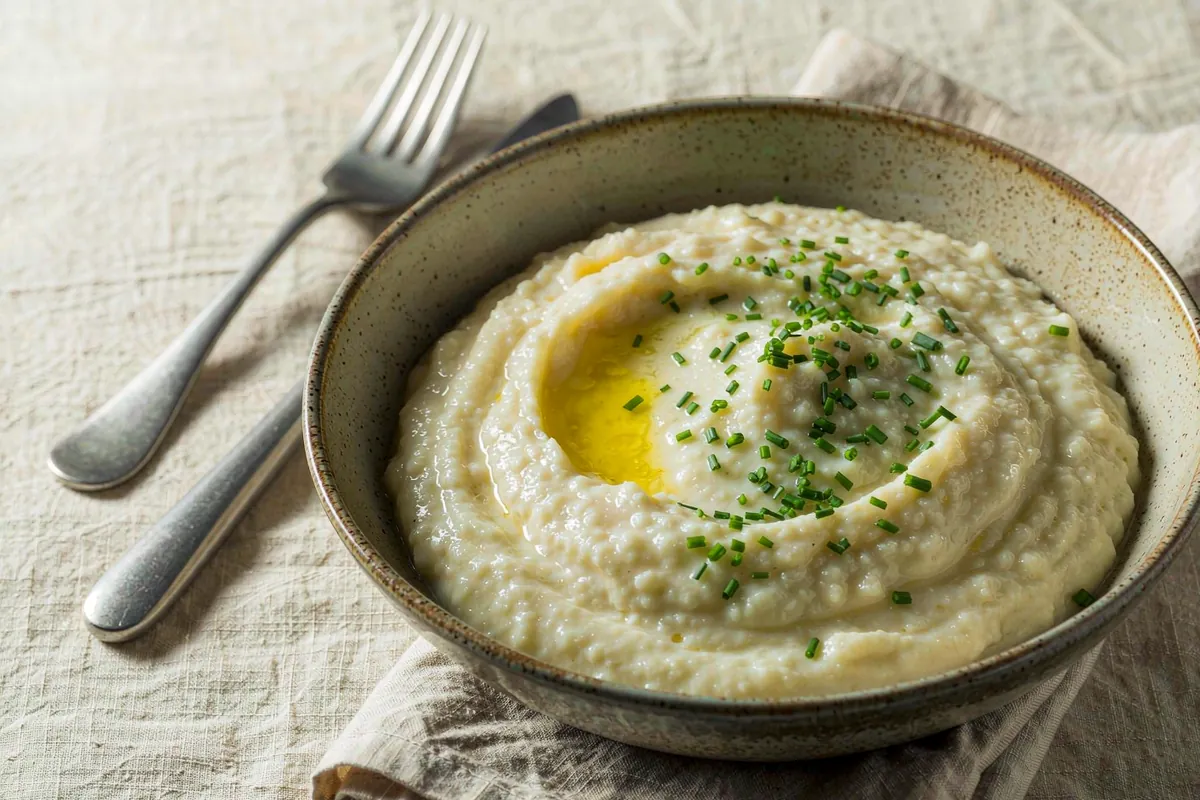
Floury potatoes boiled in their skins, drained dry, then beaten with warm milk and butter into a smooth, light mash that holds a soft peak without turning gluey.
About this dish
Mashed potatoes turn gluey for one reason: overworking them once the starch has swollen. Choose a floury variety, boil it in the skin so the flesh stays dry, and drain it well before any dairy goes near it. Warm the milk to about 60 °C; cold liquid makes the starch seize and the mash go lumpy. Use a masher or a ricer, never a blender. The bowl should smell of hot butter and cream, and a spoon drawn through should leave a clean, glossy trail.
Before you start
Equipment: Pot. Tap the ingredient checkboxes as you go.
Method
7 steps · tick each one off as you finish it.
Prep the potatoes
Cut 900 g floury potatoes into even 4 cm chunks, keeping the skins on, and rinse them in cold water. Cover with 1500 ml cold water and 1.5 tsp salt in a large pot; the water should sit 2 cm above the potatoes.
Boil gently
Bring to a boil over high heat, then drop to a steady simmer for 18 to 20 minutes. They are ready once a knife slides through a chunk with no resistance and the corners just start to crumble into the water.
Drain and dry
Drain well, return the potatoes to the hot pot and set it over low heat for 1 minute, shaking gently. The surfaces should look dry and floury and the steam smell earthy, not wet; this step stops a watery mash.
Warm the dairy
Warm 150 ml milk to about 60 °C in a small pan with 60 g cubed butter, stirring until the butter melts. Do not let it boil; hot, not scalding, liquid folds into the starch without seizing into lumps.
Mash
Peel away the skins and rice or mash the potatoes, then pour in the warm milk in 3 additions, folding with a wooden spoon. Stop the moment it looks smooth and glossy; a spoon drawn through should leave a clean trail.
Season and hold
Fold in 1/4 tsp white pepper and taste, adding a little more salt only if needed. For a soft hold, cover and keep warm in a 120 °C oven for up to 20 minutes; the surface should not form a skin.
Serve
Spoon into warm bowls, make a shallow well in each and add a small knob of butter plus 2 tbsp chives. The mash should hold a soft peak rather than slumping, and smell clearly of hot butter and cream.
Tips that matter
- Warm the milk before adding; cold dairy makes the starch seize into lumps you cannot beat out.
- Never use a food processor or blender; the blades burst the starch cells and turn the mash into paste.
Easy variations
- Fold in 40 g grated cheddar and 1 tsp mustard for a savoury, cheesy mash.
- Add 2 cloves of roasted garlic, squeezed soft, with the butter for a sweeter, mellow flavour.
Questions that come up
Why is my mash gluey?
It was overworked or blended. Mash only until smooth and stop the moment the milk is incorporated.
Can I make it ahead?
Yes, keep it warm in a covered dish over a 120 °C oven for up to 30 minutes, then loosen with a splash of hot milk.
Nutrition, roughly
| Energy | 280 kcal |
|---|---|
| Protein | 5 g |
| Carbohydrate | 38 g |
| Fat | 12 g |
Estimated per serving from standard ingredients, rounded. Treat it as a guide, not clinical data.
A Staple Cupboard That Earns Its Space
A short list of grains, flours and dried noodles, how long they actually keep, and what each one can become once it reaches the pan.