Dumplings & Steamed Buns · Chinese home cooking
Steamed Vegetable Buns
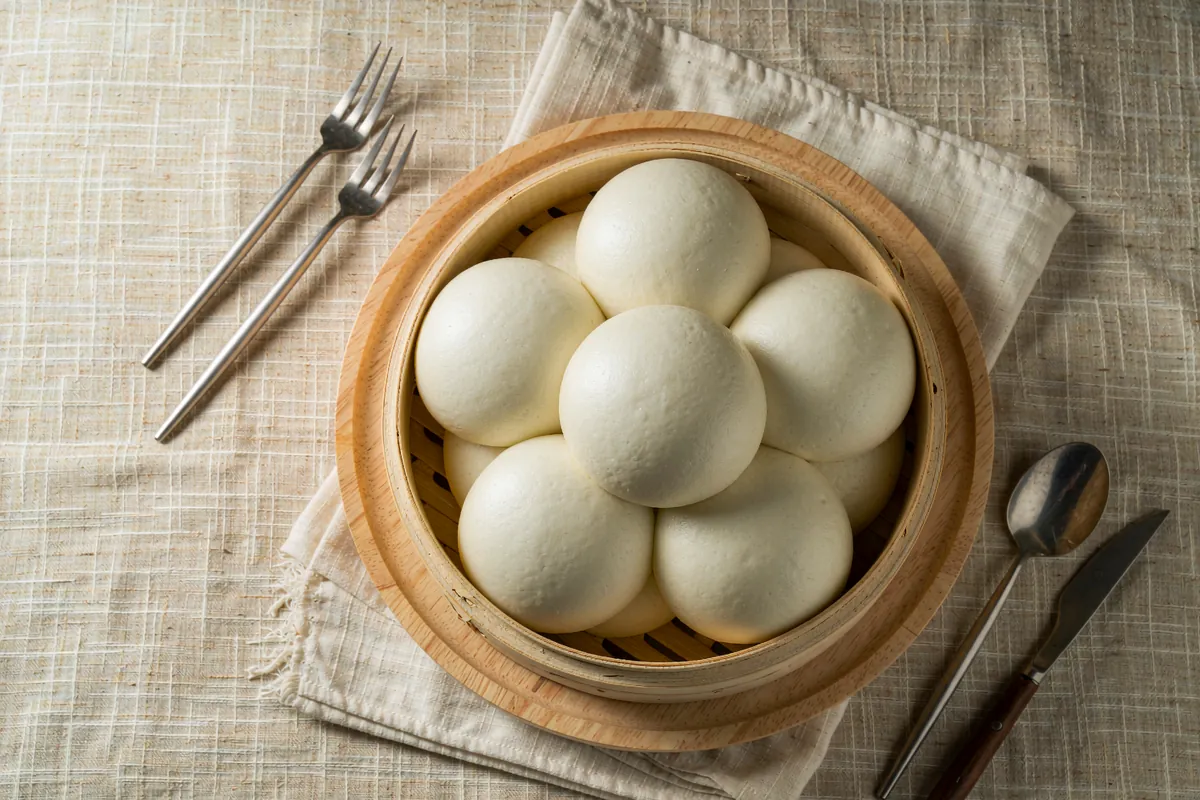
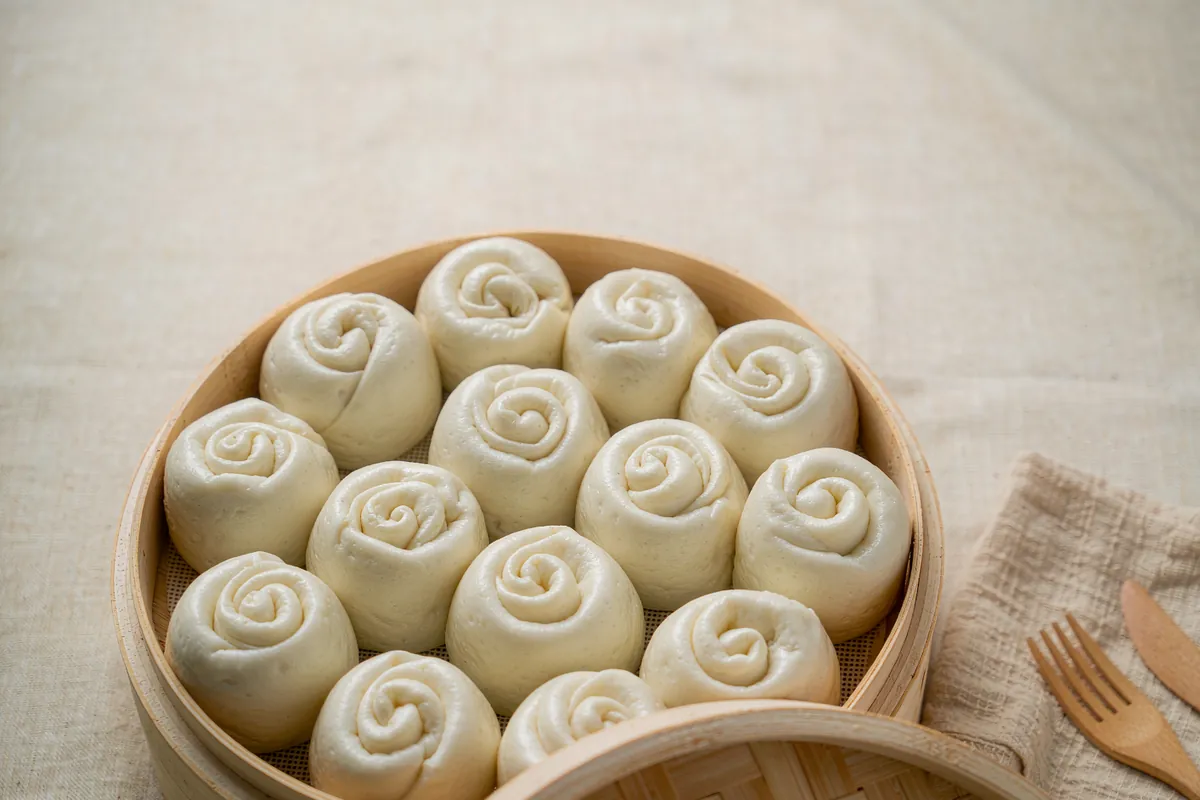
Fluffy yeast dough wraps a firm, dry filling of cabbage, carrot and mushroom; a short second proof and steady steam give each bun a high crown and a clean, unbroken top.
About this dish
A filled bun balances two timelines: the dough wants to rise while the filling wants to stay put. Any wetness in the vegetables turns to steam inside the sealed skin and leaves a soggy pocket under the crown, so I cook the mushrooms first and press the cabbage hard. Shaped buns feel light and faintly hollow, like small warm pillows, and give a soft hush when the steamer opens. The kitchen smells of yeast and toasted sesame; the finished tops stay smooth and white, gathered into a tight spiral.
Before you start
Equipment: Steamer, Skillet. Tap the ingredient checkboxes as you go.
Method
7 steps · tick each one off as you finish it.
Proof the sponge
Dissolve the sugar and yeast in the lukewarm water and leave 8 minutes until a thick foam forms. Stir in the oil, mix in the flour and salt, and knead 10 minutes until the dough is smooth, slightly tacky and pulls cleanly from the board.
First proof
Cover the bowl with a damp cloth and proof at 27 C for 60 minutes, until doubled and a finger pressed 1 cm into the surface leaves a dent that stays. Cold kitchens need up to 90 minutes; judge the dough, not the clock.
Dry the vegetables
Salt the cabbage with the 1 tsp salt, leave 10 minutes, then squeeze in a cloth until no liquid runs. Fry the mushrooms in the 2 tbsp oil over high heat for 4 minutes until they squeak and their edges turn golden, then cool everything.
Season the filling
Toss the cooled mushrooms, squeezed cabbage, grated carrot and scallions with the soy sauce and sesame oil. The mixture should look glossy but hold its shape in a spoon with no pool of liquid at the bottom of the bowl; if it slumps, squeeze again.
Divide and roll wrappers
Punch down the dough, knead 1 minute and rest 5 minutes. Divide into 12 pieces of about 60 g and roll each into a 10 cm round, 4 mm thick at the centre and 2 mm at the rim, using the reserved 30 g flour.
Pleat the buns
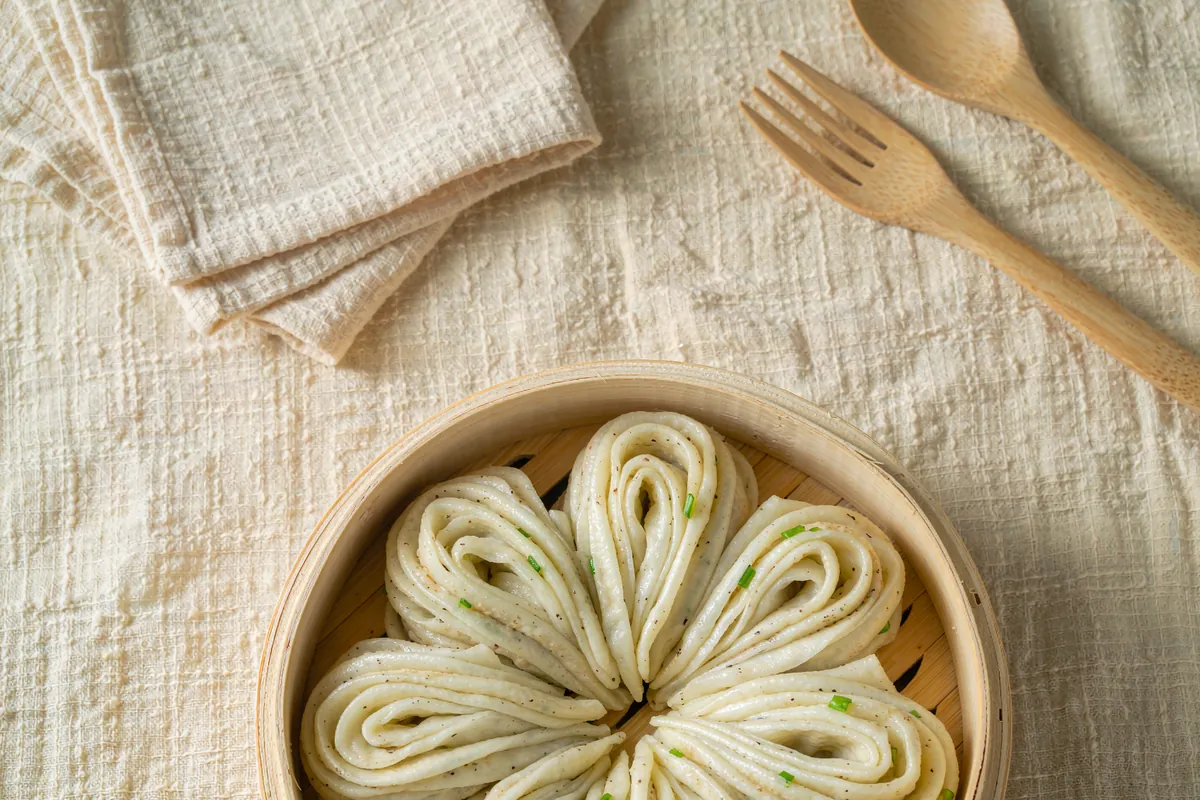
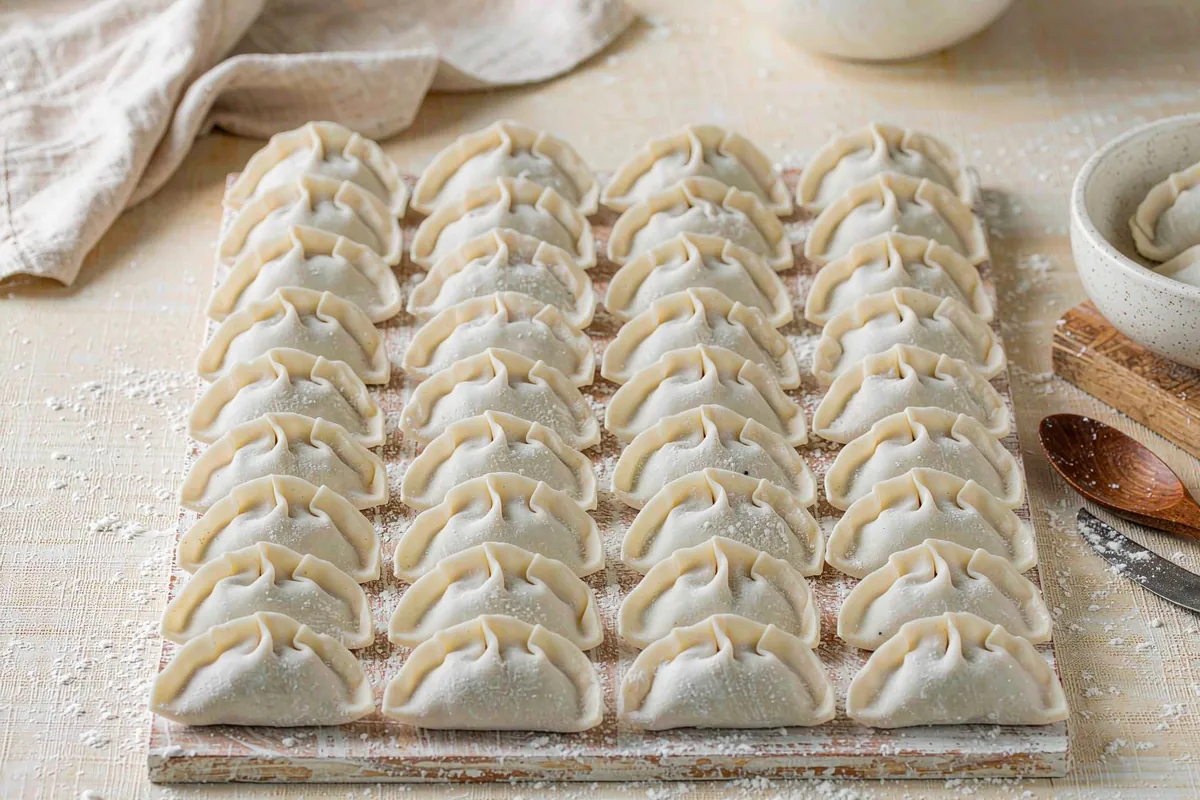
Set 35 g filling in the centre, damp the rim with cold water, then pleat the edge inward in 12 small folds, rotating as you go, and twist the top closed. Each bun should sit flat with a tight spiral and no filling showing.
Second proof and steam
Space the shaped buns 6 cm apart on parchment and leave them to prove for roughly 20 minutes at 28 C, until they look airy and feel lighter in the hand. Steam over boiling water at medium-high heat for 13 minutes, then rest 5 minutes with the lid closed before opening.
Tips that matter
- Cool the cooked mushrooms completely before mixing; warm mushrooms draw water out of the salted cabbage and undo all the squeezing in a few minutes.
- Keep the centre of each wrapper thicker than the rim; the pleats bunch up the thin edge, while the top needs the extra dough to hold its dome.
Easy variations
- Add 100 g crumbled firm tofu and 1 tbsp hoisin sauce to the filling for a sweeter, denser bun that holds its shape when steamed.
- Fold 30 g chopped garlic chives into the filling just before shaping for a sharp green note against the mild cabbage.
Questions that come up
Why is there a wet pocket under the top of my buns?
The filling was too wet or went in warm. Squeeze the cabbage until no liquid runs, cook and cool the mushrooms, and let every component reach room temperature before you seal the buns.
Can I steam them from frozen?
Yes. Freeze after shaping but before the second proof, then steam from frozen over medium heat for 16 minutes. They will not crown as high, so give them a little more space in the steamer.
Nutrition, roughly
| Energy | 195 kcal |
|---|---|
| Protein | 6 g |
| Carbohydrate | 34 g |
| Fat | 5 g |
Estimated per serving from standard ingredients, rounded. Treat it as a guide, not clinical data.
Flour, Water and Rest: Working with Wheat Dough
The three states of a simple dough, how hydration changes them, and why resting time is an ingredient rather than a pause.