Potatoes & Other Staples · Italian home cooking
Soft Creamy Polenta
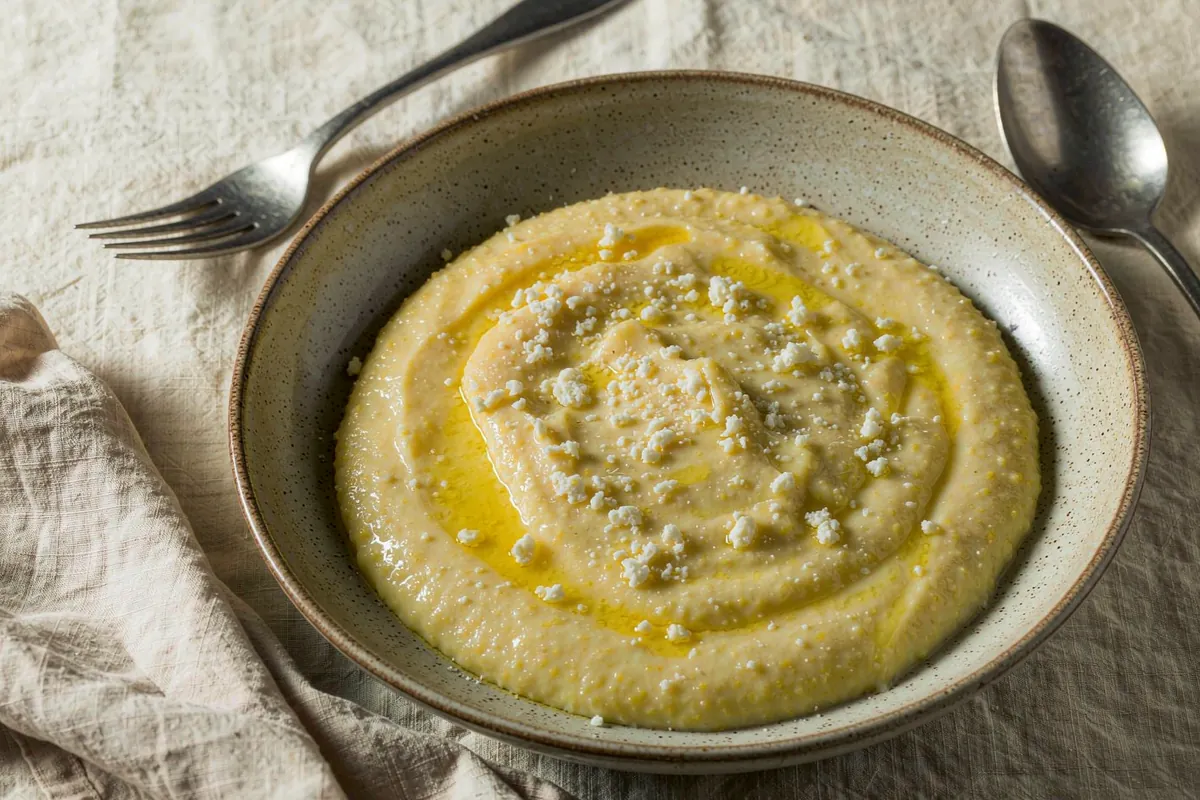
Coarse cornmeal whisked into simmering stock and milk, stirred slowly until it thickens into a soft, spoonable mound, then enriched with butter and parmesan off the heat.
About this dish
Polenta asks for a slow pour and a patient arm. Rain the cornmeal into barely simmering liquid in a thin stream while whisking, or it seizes into hard lumps that never soften. Keep the heat low enough that the surface gives a lazy plop, and stir every couple of minutes as the grains swell and release starch. The smell shifts from raw cornmeal to something warm and slightly sweet. It is done when a spoon stands briefly and the mixture pulls away from the pot wall.
Before you start
Equipment: Pot. Tap the ingredient checkboxes as you go.
Method
7 steps · tick each one off as you finish it.
Bring the liquid up
Combine 700 ml stock and 300 ml milk warmed to 60 °C in a heavy pot, add 1 tsp salt and bring to a bare simmer over medium heat, about 6 minutes. Small bubbles should just break the surface.
Rain in the cornmeal
Turn the heat to low and pour 200 g cornmeal into the pot in a thin, steady stream, whisking constantly for 2 minutes. Keep the stream slow so no lumps form; the mixture should look like loose, grainy cream.
Simmer and stir
Cook on the lowest heat for 25 to 30 minutes, stirring every 2 minutes with a wooden spoon in slow circles. The polenta thickens gradually from gritty liquid to a soft cream and the raw cornmeal smell turns warm and sweet.
Judge the body
Call it done when a spoon drawn through leaves a channel that closes over about 3 seconds and the mixture pulls away from the pot wall. If it still tastes gritty, stir in 80 ml hot water and cook 5 minutes more.
Enrich off the heat
Turn off the heat and beat in 50 g cubed butter and 60 g parmesan for 30 seconds, until the polenta turns glossy and smooth. Add 1/4 tsp nutmeg and taste; it should read as gently sweet and savoury.
Hold if needed
If you are not serving at once, cover the pot and keep it over a 90 °C oven or a warm water bath for up to 15 minutes. Polenta stiffens as it sits, so loosen with 60 ml hot milk before spooning out.
Serve
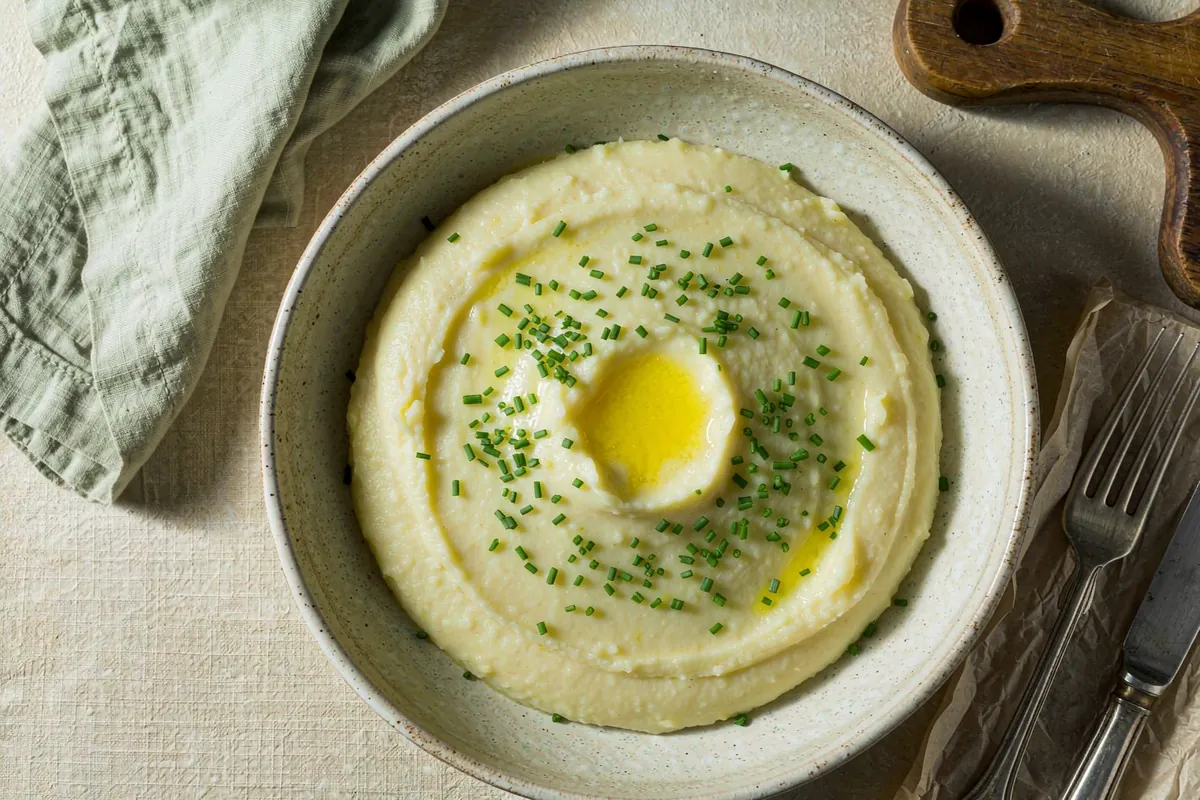
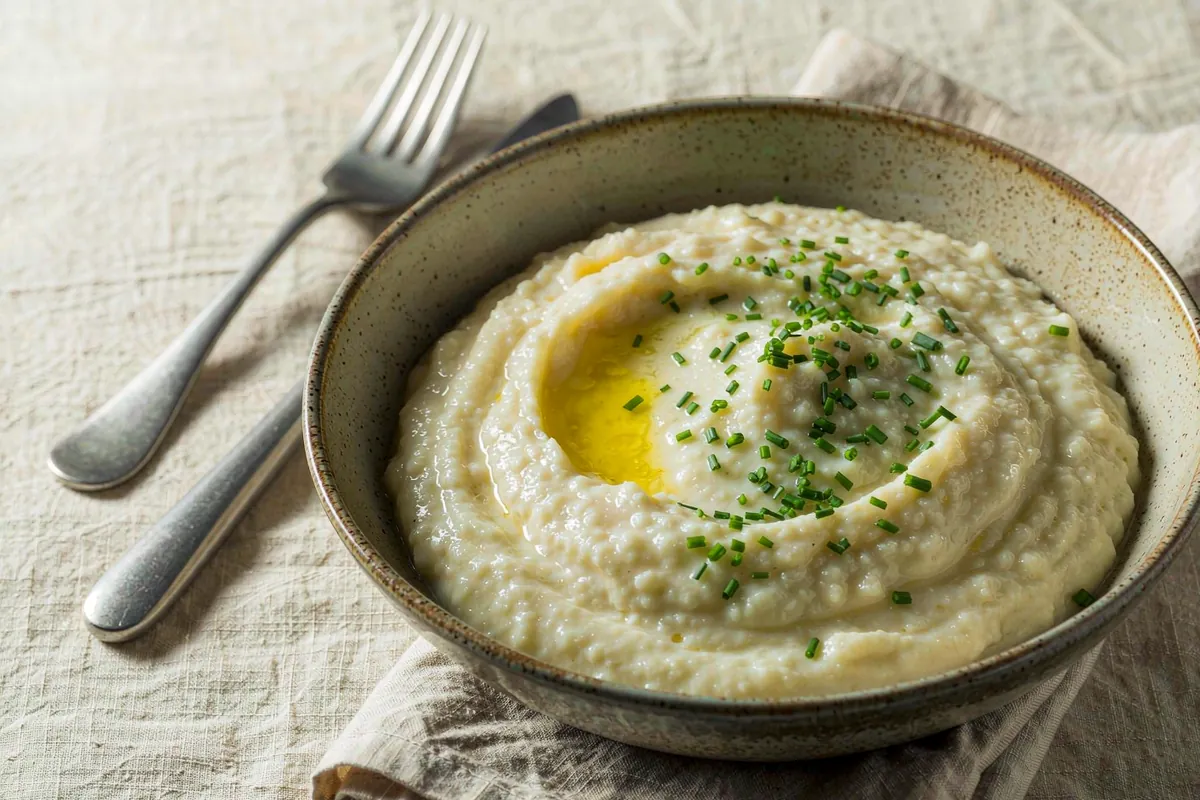
Spoon into warm shallow bowls; the surface should hold a soft mound that slowly settles. Finish with 1 tbsp chopped parsley and an extra knob of butter, and serve while the polenta is still loose and creamy.
Tips that matter
- Use coarse, stone-ground cornmeal, not the instant kind; instant polenta sets too fast to develop the same soft, creamy body.
- Keep a kettle of hot water beside the stove; polenta stiffens quickly and loosens with a splash, not a long cook.
Easy variations
- Stir 60 g crumbled blue cheese in at the end instead of parmesan for a sharper finish.
- Pour the soft polenta into a tray, chill until firm, then cut into squares and pan-fry in butter.
Questions that come up
Why are there hard lumps in my polenta?
The cornmeal went in too fast or the liquid was boiling hard. Pour in a thin stream while whisking and keep a bare simmer.
Is polenta gluten-free?
Yes, pure cornmeal contains no gluten; just check that your stock and any added cheese are free of any wheat thickener.
Nutrition, roughly
| Energy | 320 kcal |
|---|---|
| Protein | 9 g |
| Carbohydrate | 44 g |
| Fat | 12 g |
Estimated per serving from standard ingredients, rounded. Treat it as a guide, not clinical data.
A Staple Cupboard That Earns Its Space
A short list of grains, flours and dried noodles, how long they actually keep, and what each one can become once it reaches the pan.