Potatoes & Other Staples · Italian home cooking
Potato Gnocchi
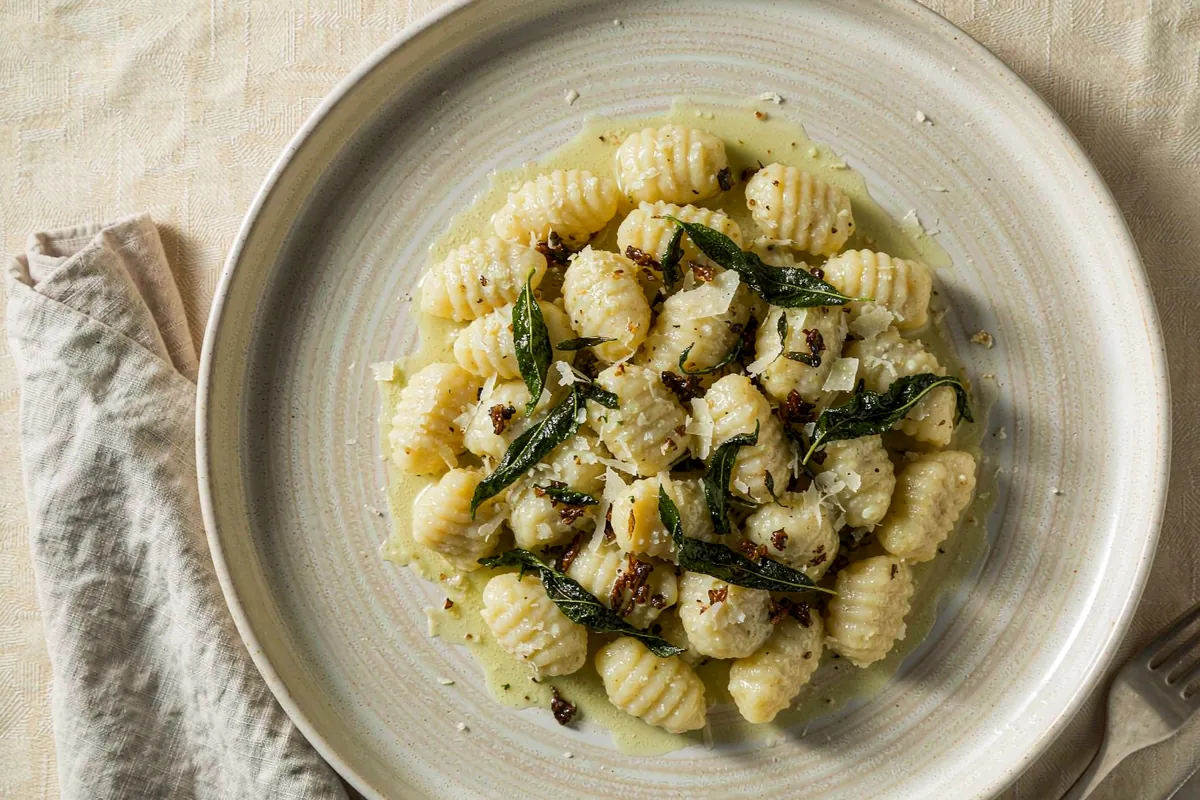
Riced floury potatoes bound with just enough flour and egg into soft dumplings, rolled, ridged and boiled until they float, then tossed in a foaming sage butter.
About this dish
Gnocchi punish excess flour. The dough should feel soft and slightly tacky, barely holding together, because every extra handful turns the dumplings from pillows to bullets. Use dry, riced potatoes while they are still warm so the starch sets without water, add the egg last, and knead for barely thirty seconds. Roll ropes, cut, and press each piece lightly against a fork for ridges that hold sauce. They are done seconds after they bob to the surface; the kitchen smells of browned butter and sage.
Before you start
Equipment: Pot. Tap the ingredient checkboxes as you go.
Method
7 steps · tick each one off as you finish it.
Cook and rice the potatoes
Bake 700 g potatoes at 200 °C for 50 minutes, until a knife slides through with no resistance. Peel them while still warm and press through a ricer into a wide bowl; the flesh should fall in dry, fluffy strands.
Dry the starch
Spread the riced potato out and let the steam escape for 5 minutes. It should look dry and floury rather than damp or gluey; starting with wet potato forces you to add flour, which makes the gnocchi heavy.
Bind the dough
Scatter 160 g flour and 1 tsp salt over the potato, add 120 ml beaten egg and fold for just 30 seconds to a soft, slightly tacky dough. Stop the instant it holds together; more flour turns it rubbery.
Shape and ridge
On a floured surface, roll the dough into 2 cm thick ropes and cut into 2 cm pieces. Roll each piece lightly down the back of a fork to make ridges, then dust with flour so they do not stick together.
Boil in batches
Bring a large pot of salted water to a rolling boil at 100 °C. Drop in 15 gnocchi at a time; they are done 30 seconds after they bob to the surface, when they look slightly swollen and feel tender.
Make the sage butter
Melt 60 g butter in a wide skillet over medium heat for 2 minutes, until it foams and smells nutty. Add 10 g sage leaves; they should crisp and darken at the edges within 30 seconds, not blacken.
Toss and serve
Lift the gnocchi into the skillet with a slotted spoon, toss for 30 seconds to coat, and add 40 g parmesan. Serve at once on warm plates, while the dumplings are still light and the butter glossy.
Tips that matter
- Add flour a little at a time and stop at the first dough that holds together; you may need less than 160 g on a dry day.
- Boil in small batches of about 15; a crowded pot drops the temperature and the dumplings turn gummy.
Easy variations
- Swap the sage butter for 200 ml simple tomato sauce and a handful of basil.
- Replace 100 g of the potato with 100 g pumpkin puree for a pale orange dough with a faint sweetness.
Questions that come up
Why are my gnocchi dense and rubbery?
Too much flour or over-kneading. The dough should be soft and just barely hold; knead for no more than 30 seconds.
Can I freeze them?
Yes, freeze shaped uncooked gnocchi on a floured tray, then bag them; boil from frozen, allowing 30 extra seconds after they float.
Nutrition, roughly
| Energy | 420 kcal |
|---|---|
| Protein | 11 g |
| Carbohydrate | 66 g |
| Fat | 12 g |
Estimated per serving from standard ingredients, rounded. Treat it as a guide, not clinical data.
A Staple Cupboard That Earns Its Space
A short list of grains, flours and dried noodles, how long they actually keep, and what each one can become once it reaches the pan.